
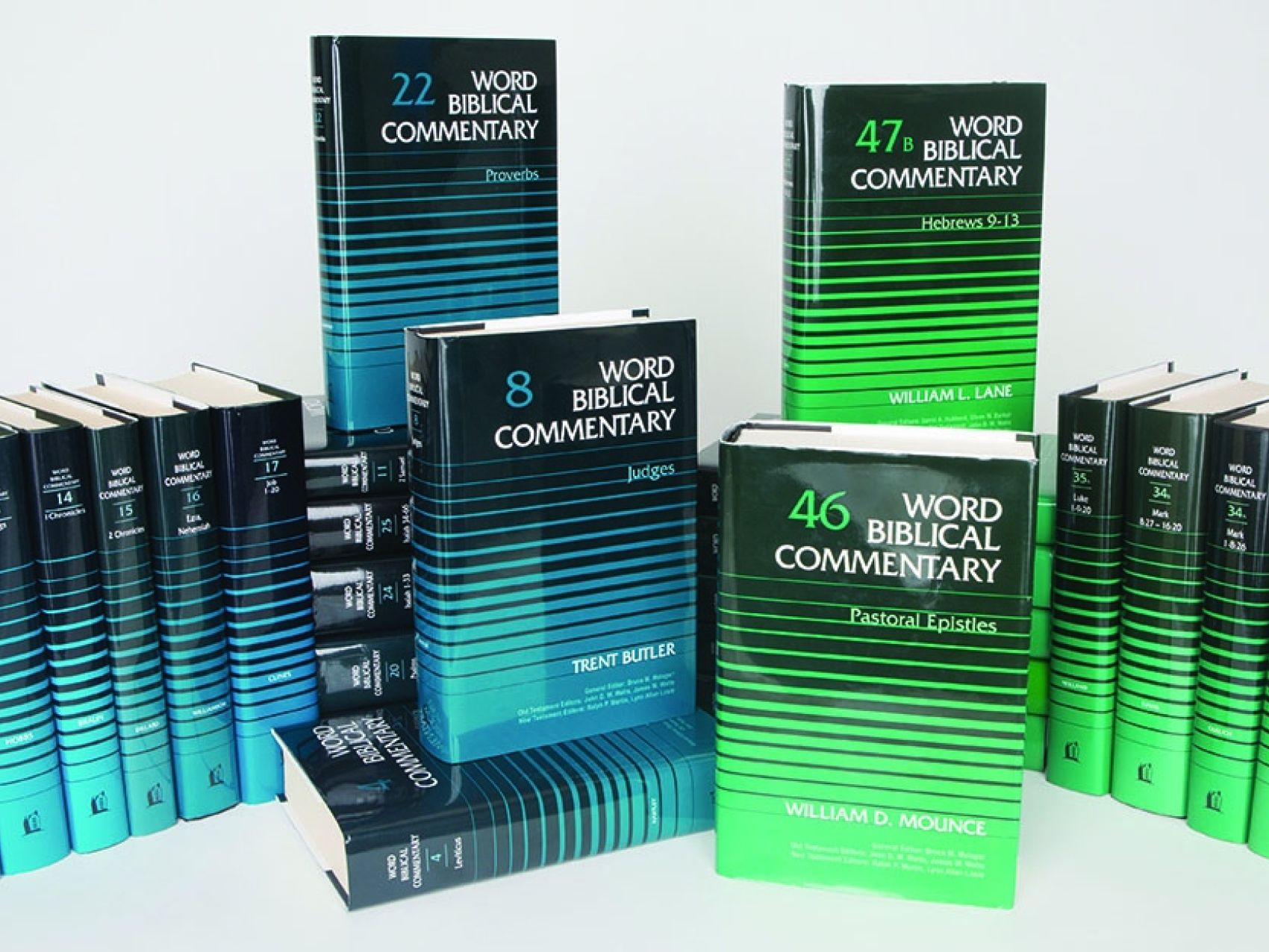
Word Biblical Commentary

Word Biblical Commentary

The Word Biblical Commentary is one of the most recognisable technical commentary series of the late twentieth century, produced under the general editorship of David A. Hubbard and Glenn W. Barker and published by Thomas Nelson. From the outset, the series set out to offer detailed critical exegesis rooted in the tools of modern scholarship, with careful attention to original languages, form, and historical setting. Its ambition was never primarily homiletical. It aims instead to stand close to the text, to analyse it rigorously, and to present exegetical options with clarity and documentation.

The tone of the series is academic and methodical. Each volume follows a consistent structure, moving through text, form, structure, comment, and explanation. For pastors trained to work closely with Hebrew and Greek, this predictability is a real strength. You know what you are opening and where to find what you need. The writing is often restrained, sometimes dense, and usually cautious in theological conclusions.

Theologically, the series is mixed. Some volumes are written by broadly evangelical scholars who handle the text with reverence and restraint. Others reflect more critical assumptions, particularly around authorship, composition, and redaction. The series does not press a unified confessional stance. It is best understood as a technical reference tool rather than a theological guide.

For preachers, the value of the Word Biblical Commentary lies in its careful spade work. It can clarify difficult syntax, flag textual problems, and lay out interpretive options honestly. It rarely tells you what to preach, but it often helps you see what the text is doing. Used wisely, it can steady sermon preparation. Used alone, it can leave proclamation thin.

Publisher: Thomas Nelson Publishing

OT Editor: Nancy deClaissé-Walford

NT Editor: David B. Capes

Reset

Jeremiah 1-25

AdvancedAdvanced students / scholars, Pastors-in-trainingStrong recommendation
8.0

Summary

We find Peter C. Craigie, Page H. Kelley, Joel F. Drinkard’s Jeremiah 1-25 a substantial technical guide to the opening half of Jeremiah. It keeps us close to the text, helps us weigh difficult interpretive decisions, and gives careful attention to structure and flow so we are not preaching isolated fragments.

Because it is written for serious study, it serves us best when we are doing patient preparation. It is not a ready made sermon handbook, but it strengthens the sort of exegesis that makes proclamation clearer, steadier, and less driven by guesswork.

Why Should I Own This Commentary?

We should own this commentary when we want technical help that improves accuracy. Jeremiah can be dense, emotionally charged, and full of repeated themes, and a careful technical companion helps us keep context, argument, and emphasis in view.

We also benefit when a resource forces us to slow down and give reasons for our conclusions. That discipline guards the pulpit. It helps us speak with confidence that rises from the passage, not from habit or borrowed impressions.

For Reformed preaching, the value is often indirect but real. Strong text work supports more faithful Christward proclamation, especially in a book where judgement, covenant, and newness of heart demand theological clarity.

Closing Recommendation

We recommend this as an advanced technical companion for those who teach Jeremiah with some regularity. Pair it with a more directly pastoral commentary for sermon shape and application, and let this one do its best work in the detailed exegesis that keeps us honest and grounded.

As pastoral next steps, use the Bible Book Overview to stay oriented in Jeremiah, browse Top Recommendations to strengthen your shelf, and consult the Reformed Commentary Index for a wider set of trusted options.


🛒
Purchase here

Jeremiah 26-52

AdvancedAdvanced students / scholars, Pastors-in-trainingUseful supplement
7.7

Summary

We find Jeremiah 26 to 52 to be a gripping close to the book, where rejection of the Word of the Lord ripens into exile, and yet hope still breaks through with stubborn grace. Keown, Scalise, and Smothers help us follow the movement from conflict and collapse toward the Lord’s purposes that neither kings nor armies can cancel.

This is a technical commentary, strongest when we need help with interpretation and careful attention to how narrative and prophecy work together. It is not primarily a sermon manual, but it supports faithful preaching by keeping us close to the text.

Why Should I Own This Commentary?

We should own this commentary if we plan to preach or teach the second half of Jeremiah with care. These chapters carry heavy pastoral weight, including persecution, political fear, and the pain of judgment. The authors help us keep the shape of the text clear, so we do not preach impressions instead of passages.

We also benefit when Jeremiah’s themes press into our own ministry, including courage in speaking God’s Word, the danger of false assurances, and the Lord’s faithfulness even when His people fall. Careful exegesis helps us speak these truths with both firmness and compassion.

For Reformed preaching, the value is again indirect. The clearer the text, the steadier our Christward proclamation will be, because we will be driven by Jeremiah’s message before we draw the wider lines of fulfilment.

Closing Recommendation

We recommend this as an advanced technical companion for Jeremiah 26 to 52. It will serve best alongside a more directly pastoral exposition, but it offers substantial help for serious preparation and careful teaching.

As a next step, we can visit the Bible Book Overview for Jeremiah, browse Top Recommendations, or use the Reformed Commentary Index to build a wiser, more balanced shelf.


🛒
Purchase here

2 Samuel

AdvancedAdvanced students / scholarsUseful supplement
7.5
Bible Book: 2 Samuel
Publisher: Thomas Nelson
Theological Perspective: Non-Evangelical / Critical
Resource Type: Commentary

Summary

We find Anderson’s 2 Samuel to be a detailed technical guide through David’s rise, reign, and the costly consequences of sin within the covenant community. He helps us follow the narrative carefully, paying attention to structure, wording, and the way the book develops its theological burdens.

The commentary is not written from an explicitly confessional stance, and it sometimes leans into critical questions. We will want to read with discernment. Even so, its close engagement with the text can serve us when we keep Scripture’s own priorities in view.

Why Should I Own This Commentary?

We should own this commentary when we are preaching 2 Samuel and want technical help with a book that is both familiar and easy to mishandle. The narrative moves quickly, and it is tempting to preach mere moral lessons. Careful exegesis helps us keep covenant, kingship, and the Lord’s purposes central.

We also benefit when we face the book’s darker chapters. Anderson’s attention to detail can help us handle these texts soberly, without sensationalism, and without avoiding the hard pastoral implications for leadership, worship, and repentance.

For Reformed preaching, we treat it as a supplement. Used well, it sharpens our reading of the narrative, but we must ensure our theology and our Christward movement are governed by the canon and by sound confessional instincts.

Closing Recommendation

We recommend this as an advanced technical supplement for 2 Samuel, useful with discernment and best paired with a clearly evangelical and pastorally driven commentary. It can strengthen careful teaching, especially where the narrative details matter for faithful exposition.

As a next step, we can visit the Bible Book Overview for 2 Samuel, browse Top Recommendations, or use the Reformed Commentary Index to build a wiser, more balanced shelf.


🛒
Purchase here

Job 21-42

AdvancedAdvanced students / scholarsUseful supplement
7.5
Bible Book: Job
Publisher: Thomas Nelson
Theological Perspective: Non-Evangelical / Critical
Resource Type: Commentary

Summary

We find Clines’s Job 21 to 42 to be a thorough technical companion for the later speeches, the Lord’s addresses, and the book’s closing resolution. He helps us attend to the text’s argument and rhetoric, and he forces us to face the book’s tension without rushing to cheap closure.

As with the earlier volume, the approach is not confessional, so we read with care. Yet the close work can still serve us, especially when we keep Job’s canonical purpose in view and refuse speculative detours that blunt the book’s message.

Why Should I Own This Commentary?

We should own this commentary if we regularly teach Job and want a technical resource for the hardest stretches. The later dialogues can be complex, and the Lord’s speeches are often either over spiritualised or treated as mere poetry. This volume helps us stay with the text and argue carefully.

We also benefit from its sustained attention to the book’s rhetorical strategy. Job is not simply giving us answers, it is training the fear of the Lord, humbling our claims to mastery, and exposing the limits of human counsel. Careful reading helps us preach that pastoral aim with integrity.

For Reformed preaching, we treat this as a specialist supplement. Used wisely, it sharpens our reading, but we must do our own theological and Christward work responsibly.

Closing Recommendation

We recommend this as an advanced technical supplement for Job 21 to 42, useful with discernment and best paired with a clearly evangelical, church oriented commentary. It will serve those doing serious preparation and careful teaching in Job.

As a next step, we can visit the Bible Book Overview for Job, browse Top Recommendations, or use the Reformed Commentary Index to build a wiser, more balanced shelf.


🛒
Purchase here

Job 1-20

AdvancedAdvanced students / scholarsUseful supplement
7.5
Bible Book: Job
Publisher: Thomas Nelson
Theological Perspective: Non-Evangelical / Critical
Resource Type: Commentary

Summary

We find Clines’s Job 1 to 20 to be an exceptionally detailed technical treatment of Job’s opening cycles. He helps us slow down in the speeches, attend to the text’s rhetoric and progression, and face the book’s hard questions without smoothing them out too quickly.

The work is not written from a confessional Reformed stance, so we use it with discernment. Even so, its close engagement with the text can be genuinely useful, especially when we keep Job’s canonical voice and theological aims in the foreground.

Why Should I Own This Commentary?

We should own this commentary when we are doing serious work in Job and want a technical resource that forces careful observation. Job can be mishandled either by quick answers that the book itself rebukes, or by despairing ambiguity that refuses the fear of the Lord. Close exegesis helps us navigate between those errors.

We also benefit when the speeches become repetitive or emotionally intense. Clines helps us notice the development in argument and the shifts in tone, which supports preaching that respects the book’s pacing and pastoral realism.

For Reformed preaching, we keep our doctrinal bearings clear, and we treat this as a supplement. Its value is in sharpening our reading, not in supplying our theological conclusions.

Closing Recommendation

We recommend this as an advanced technical supplement for Job 1 to 20. It is best used alongside a more explicitly evangelical and church facing commentary, but it can strengthen careful preparation when used wisely.

As a next step, we can visit the Bible Book Overview for Job, browse Top Recommendations, or use the Reformed Commentary Index to build a wiser, more balanced shelf.


🛒
Purchase here

Psalms 51-100

AdvancedAdvanced students / scholars, Pastors-in-trainingUseful supplement
7.6
Bible Book: Psalms
Publisher: Thomas Nelson
Theological Perspective: Broadly Evangelical
Resource Type: Commentary

Summary

We find Tate’s Psalms 51 to 100 to be a substantial technical guide through a deeply pastoral portion of the Psalter. These psalms move from confession and lament into trust, praise, and renewed confidence in the Lord. Tate helps us handle the text with care, especially where poetry, structure, and translation questions matter.

This volume is at its best when we need detail, patient exegesis, and help tracing the argument of individual psalms. It is less concerned to hand us sermon applications, but it gives the raw material that makes applications truer.

Why Should I Own This Commentary?

We should own this commentary if we teach the Psalms regularly and want a reliable technical resource. The Psalms can be mishandled either by turning them into vague therapeutic comfort, or by treating them as detached from covenant faith and the worshipping community. Careful exegesis helps us avoid both mistakes.

We also benefit when the psalms speak in intense emotional registers. Tate’s attention to structure and phrasing helps us keep lament honest, confession clear, and praise robust. That supports preaching that meets real people in real grief without losing the fear of the Lord.

For Reformed preaching, the value is again the strengthening of the text level footing. The Psalms train us to pray and sing as believers, and careful handling helps us lead the church in that training.

Closing Recommendation

We recommend this as an advanced technical companion for Psalms 51 to 100, especially for pastors and teachers who want to do careful work in the Psalms. It pairs well with a more pastorally oriented exposition that moves more quickly toward sermon structure and application.

As a next step, we can visit the Bible Book Overview for Psalms, browse Top Recommendations, or use the Reformed Commentary Index to build a wiser, more balanced shelf.


🛒
Purchase here

John

AdvancedAdvanced students / scholars, Pastors-in-trainingUseful supplement
7.7
Bible Book: John
Publisher: Thomas Nelson
Theological Perspective: Broadly Evangelical
Resource Type: Commentary

Summary

We find Beasley Murray’s John to be a careful, text centred guide to the Fourth Gospel, combining technical detail with a steady concern to let John speak in his own voice. He helps us track the Gospel’s structure, its key themes, and its repeated insistence that Jesus is the Christ, the Son of God.

The style is scholarly but not needlessly obscure. It is most useful when we want help with interpretation, argument flow, and the Gospel’s theological emphases, rather than a set of sermon outlines.

Why Should I Own This Commentary?

We should own this commentary when we are preaching John and want a mature companion that keeps our feet in the text. John’s Gospel invites both shallow familiarity and over imaginative speculation. This volume helps us slow down, observe, and argue responsibly.

We also benefit from its attention to the Gospel’s big movements, especially the signs, the growing opposition, and the climactic focus on the cross and resurrection. That helps us preach John with clear trajectory, not as isolated scenes.

For Reformed preaching, the value lies in the way it supports faithful proclamation of Christ from the text itself. It does not do all our homiletical work, but it strengthens the exegesis that makes our preaching sturdier and more credible.

Closing Recommendation

We recommend this as an advanced, dependable exegetical companion for the Gospel of John. It is particularly helpful when we need careful reasoning and textual clarity, and it pairs well with a more explicitly pastoral exposition.

As a next step, we can visit the Bible Book Overview for John, browse Top Recommendations, or use the Reformed Commentary Index to build a wiser, more balanced shelf.


🛒
Purchase here

Revelation 6-16

AdvancedAdvanced students / scholarsUseful supplement
7.4
Bible Book: Revelation
Publisher: Thomas Nelson
Theological Perspective: Non-Evangelical / Critical
Resource Type: Commentary

Summary

We find David E. Aune’s Revelation 6-16 a massive technical volume dealing with seals, trumpets, and judgement imagery in extensive detail. It can be helpful when we need technical clarification and a wide survey of interpretive options.

Because it is written within a critical scholarly environment, we use it carefully. Its best value is as a reference tool for technical matters, while we keep the book’s Christ centred purpose and pastoral call to endurance central.

Why Should I Own This Commentary?

We should own this volume if we regularly teach Revelation and want a technical resource for some of its most complex sections. These chapters are easily mishandled, either by fear driven speculation or by flattening the text into vague symbolism. Technical care can steady our reading.

We also benefit when wide ranging discussion clarifies options and forces careful observation. Even where we disagree, engagement can strengthen our interpretive discipline and reduce avoidable errors.

For preaching, we treat it as a supplement. We want our sermons shaped by the text’s message to the church, not by speculative reconstructions, yet technical help can still refine our work and improve precision.

Closing Recommendation

We recommend this as an advanced technical supplement, best used selectively and paired with a pastorally driven commentary. Used with discernment, it can strengthen accuracy and keep our preaching from drifting into guesswork.

As a next step, we can visit the Bible Book Overview, then browse Top Recommendations, and use the Reformed Commentary Index to build a wiser working shelf.


🛒
Purchase here

Revelation 1-5

AdvancedAdvanced students / scholarsUseful supplement
7.5
Bible Book: Revelation
Publisher: Thomas Nelson
Theological Perspective: Non-Evangelical / Critical
Resource Type: Commentary

Summary

We find David E. Aune’s Revelation 1-5 an academically rigorous technical commentary that offers extensive detail on language, background, and interpretive questions. It can be valuable when we need to slow down over difficult imagery and weigh options carefully.

At the same time, it sits within a critical scholarly environment. We can profit from technical observations, but we should read with discernment, keeping Revelation’s Christ centred message and pastoral purpose in the foreground.

Why Should I Own This Commentary?

We should own this commentary when we need a specialist reference tool for the opening visions of Revelation. Aune can help us avoid shallow readings by forcing careful observation of the text and its literary features.

We also benefit when technical detail helps us distinguish what is certain from what is speculative. That matters for preaching, because our people do not need confident guesses. They need clear proclamation of what God has actually revealed.

For Reformed ministry, we will treat this as a supplement. Used selectively, it can strengthen precision, while our theology and proclamation remain shaped by Scripture’s own unity and the centrality of the Lamb.

Closing Recommendation

We recommend this primarily as an advanced technical supplement for those who can read with care and caution. It is best paired with a more confessionally grounded and church focused commentary for weekly preaching and teaching.

As a next step, we can visit the Bible Book Overview, then browse Top Recommendations, and use the Reformed Commentary Index to build a wiser working shelf.


🛒
Purchase here

1, 2, & 3 John

AdvancedAdvanced students / scholars, Pastors-in-trainingStrong recommendation
7.8
Bible Book: 1 John 2 John 3 John
Publisher: Thomas Nelson
Theological Perspective: Broadly Evangelical
Resource Type: Commentary

Summary

We find Stephen S. Smalley’s 1, 2, & 3 John a careful technical guide to the Johannine letters, with sustained attention to themes of truth, love, obedience, and assurance. It helps us track the letters’ pastoral purpose, especially where the polemical edge can be misunderstood.

The volume is detailed and sometimes demanding, but it regularly brings clarity where these letters can feel repetitive or circular. That clarity can serve our preaching well.

Why Should I Own This Commentary?

We should own this commentary when we want help preaching assurance without sentimentality and warning without cruelty. The letters deal with false teaching, spiritual confidence, and genuine love for the saints. Smalley’s careful work helps us keep those threads together.

We also benefit from attention to structure and key terms. 1 John in particular can feel like it spirals rather than progresses. Technical guidance can help us show our people the letter’s pastoral logic.

For Reformed preaching, the letters are a rich field for Christ centred ministry, especially as we proclaim the apostolic testimony to the Son and the Spirit’s work in producing love, holiness, and perseverance.

Closing Recommendation

We recommend this as a useful technical companion for those who teach the Johannine letters with some regularity. It is strongest alongside a more directly expository volume, but it can sharpen our reading and steady our applications.

As a next step, we can visit the Bible Book Overview, then browse Top Recommendations, and use the Reformed Commentary Index to build a wiser working shelf.


🛒
Purchase here