
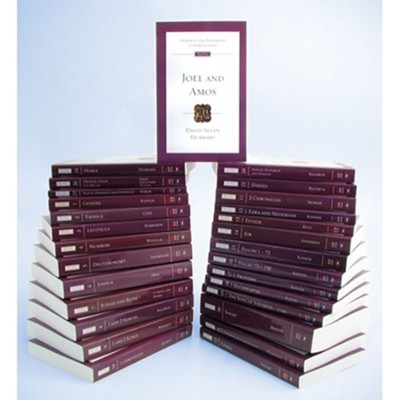
Tyndale Old Testament Commentaries

Tyndale Old Testament Commentaries

The Tyndale Old Testament Commentaries were created to give pastors and serious readers a reliable guide to the Old Testament that combines careful exegesis with theological steadiness and clarity. Published by IVP and shaped for many years under the general editorship of J A Motyer, the series mirrors the New Testament volumes in aim and spirit. It seeks to explain the text faithfully, without technical overload, and to serve the needs of those preparing to teach Scripture in the life of the church.

The tone is measured, lucid, and deliberately restrained. These are not exhaustive academic treatments, nor are they devotional sketches. The series sits between those worlds, offering disciplined explanation that respects literary structure, historical context, and theological coherence. The writing assumes careful reading, but not specialist training.

Theologically, the series is broadly evangelical with a strong instinct for the unity and authority of Scripture. Many contributors write with convictions that sit comfortably alongside Reformed theology, even where they do not press confessional categories. Critical issues are addressed, but usually without scepticism or speculative excess.

For preachers, the series has long been valued as a steady companion. It helps clarify what a passage says, how it works, and why it matters, without distracting from the task of proclamation. It rarely does the preacher’s work, but it consistently supports it.

Publisher: IVP

General Editor: David G. Firth

Reset

Leviticus

Mid-levelBusy pastors, General readers, Pastors-in-trainingStrong recommendation
8.4
Bible Book: Leviticus
Publisher: IVP
Theological Perspective: Broadly Evangelical
Resource Type: Commentary

Summary

We find Harrison’s work on Leviticus in the Tyndale Old Testament Commentaries series a steady guide for understanding what the text says and what it means. It keeps the main line of the book clear, while still slowing down over the points that often trip us up in preaching and teaching.

The best of this kind of commentary is its balance. We are given enough orientation to read Leviticus responsibly, then we are brought back to the passage itself, section by section, with an eye on the theological stakes and the shape of the argument.

Why Should I Own This Commentary?

We should own this volume when we need a clear mid level guide that is both teachable and usable. It supports our movement from careful exegesis toward proclamation, and it helps us avoid both thin readings and needless complexity.

We especially appreciate the way it highlights recurring themes and repeated words, helping us preach paragraphs rather than isolated phrases. It also tends to keep application tethered to the text, which is a gift when Leviticus is familiar and we are tempted toward shortcuts.

In practice, it sits well alongside a more technical commentary. We can do our heavier lifting elsewhere when needed, then return here for clarity, theological orientation, and a steady sense of what we should say to the church from Leviticus.

Closing Recommendation

We recommend this as a strong mid level commentary for preaching and teaching Leviticus. It will not answer every specialist question, but it consistently helps us handle the text with integrity and bring its truth to bear on the people entrusted to us.

As pastoral next steps, we can visit the Bible Book Overview, browse Top Recommendations, and use the Reformed Commentary Index to build a wiser working library.


🛒
Purchase here

Exodus

Mid-levelBusy pastors, General readers, Pastors-in-trainingTop choice
8.5
Author: Jay Sklar
Bible Book: Exodus
Publisher: IVP
Theological Perspective: Broadly Evangelical
Resource Type: Commentary

Summary

We find Sklar’s work on Exodus in the Tyndale Old Testament Commentaries series a steady guide for understanding what the text says and what it means. It keeps the main line of the book clear, while still slowing down over the points that often trip us up in preaching and teaching.

The best of this kind of commentary is its balance. We are given enough orientation to read Exodus responsibly, then we are brought back to the passage itself, section by section, with an eye on the theological stakes and the shape of the argument.

Why Should I Own This Commentary?

We should own this volume when we need a clear mid level guide that is both teachable and usable. It supports our movement from careful exegesis toward proclamation, and it helps us avoid both thin readings and needless complexity.

We especially appreciate the way it highlights recurring themes and repeated words, helping us preach paragraphs rather than isolated phrases. It also tends to keep application tethered to the text, which is a gift when Exodus is familiar and we are tempted toward shortcuts.

In practice, it sits well alongside a more technical commentary. We can do our heavier lifting elsewhere when needed, then return here for clarity, theological orientation, and a steady sense of what we should say to the church from Exodus.

Closing Recommendation

We recommend this as a strong mid level commentary for preaching and teaching Exodus. It will not answer every specialist question, but it consistently helps us handle the text with integrity and bring its truth to bear on the people entrusted to us.

As pastoral next steps, we can visit the Bible Book Overview, browse Top Recommendations, and use the Reformed Commentary Index to build a wiser working library.


🛒
Purchase here

Exodus

Mid-levelBusy pastors, General readers, Pastors-in-trainingStrong recommendation
8.2
Author: R. Alan Cole
Bible Book: Exodus
Publisher: IVP
Theological Perspective: Broadly Evangelical
Resource Type: Commentary

Summary

We find Cole’s work on Exodus in the Tyndale Old Testament Commentaries series a steady guide for understanding what the text says and what it means. It keeps the main line of the book clear, while still slowing down over the points that often trip us up in preaching and teaching.

The best of this kind of commentary is its balance. We are given enough orientation to read Exodus responsibly, then we are brought back to the passage itself, section by section, with an eye on the theological stakes and the shape of the argument.

Why Should I Own This Commentary?

We should own this volume when we need a clear mid level guide that is both teachable and usable. It supports our movement from careful exegesis toward proclamation, and it helps us avoid both thin readings and needless complexity.

We especially appreciate the way it highlights recurring themes and repeated words, helping us preach paragraphs rather than isolated phrases. It also tends to keep application tethered to the text, which is a gift when Exodus is familiar and we are tempted toward shortcuts.

In practice, it sits well alongside a more technical commentary. We can do our heavier lifting elsewhere when needed, then return here for clarity, theological orientation, and a steady sense of what we should say to the church from Exodus.

Closing Recommendation

We recommend this as a strong mid level commentary for preaching and teaching Exodus. It will not answer every specialist question, but it consistently helps us handle the text with integrity and bring its truth to bear on the people entrusted to us.

As pastoral next steps, we can visit the Bible Book Overview, browse Top Recommendations, and use the Reformed Commentary Index to build a wiser working library.


🛒
Purchase here

Genesis

Mid-levelBusy pastors, General readers, Pastors-in-trainingStrong recommendation
8.3
Bible Book: Genesis
Publisher: IVP
Theological Perspective: Broadly Evangelical
Resource Type: Commentary

Summary

We find Williamson’s work on Genesis in the Tyndale Old Testament Commentaries series a steady guide for understanding what the text says and what it means. It keeps the main line of the book clear, while still slowing down over the points that often trip us up in preaching and teaching.

The best of this kind of commentary is its balance. We are given enough orientation to read Genesis responsibly, then we are brought back to the passage itself, section by section, with an eye on the theological stakes and the shape of the argument.

Why Should I Own This Commentary?

We should own this volume when we need a clear mid level guide that is both teachable and usable. It supports our movement from careful exegesis toward proclamation, and it helps us avoid both thin readings and needless complexity.

We especially appreciate the way it highlights recurring themes and repeated words, helping us preach paragraphs rather than isolated phrases. It also tends to keep application tethered to the text, which is a gift when Genesis is familiar and we are tempted toward shortcuts.

In practice, it sits well alongside a more technical commentary. We can do our heavier lifting elsewhere when needed, then return here for clarity, theological orientation, and a steady sense of what we should say to the church from Genesis.

Closing Recommendation

We recommend this as a strong mid level commentary for preaching and teaching Genesis. It will not answer every specialist question, but it consistently helps us handle the text with integrity and bring its truth to bear on the people entrusted to us.

As pastoral next steps, we can visit the Bible Book Overview, browse Top Recommendations, and use the Reformed Commentary Index to build a wiser working library.


🛒
Purchase here

Genesis

Mid-levelBusy pastors, General readers, Pastors-in-trainingStrong recommendation
8.4
Author: Derek Kidner
Bible Book: Genesis
Publisher: IVP
Theological Perspective: Broadly Evangelical
Resource Type: Commentary

Summary

We find Kidner’s work on Genesis in the Tyndale Old Testament Commentaries series a steady guide for understanding what the text says and what it means. It keeps the main line of the book clear, while still slowing down over the points that often trip us up in preaching and teaching.

The best of this kind of commentary is its balance. We are given enough orientation to read Genesis responsibly, then we are brought back to the passage itself, section by section, with an eye on the theological stakes and the shape of the argument.

Why Should I Own This Commentary?

We should own this volume when we need a clear mid level guide that is both teachable and usable. It supports our movement from careful exegesis toward proclamation, and it helps us avoid both thin readings and needless complexity.

We especially appreciate the way it highlights recurring themes and repeated words, helping us preach paragraphs rather than isolated phrases. It also tends to keep application tethered to the text, which is a gift when Genesis is familiar and we are tempted toward shortcuts.

In practice, it sits well alongside a more technical commentary. We can do our heavier lifting elsewhere when needed, then return here for clarity, theological orientation, and a steady sense of what we should say to the church from Genesis.

Closing Recommendation

We recommend this as a strong mid level commentary for preaching and teaching Genesis. It will not answer every specialist question, but it consistently helps us handle the text with integrity and bring its truth to bear on the people entrusted to us.

As pastoral next steps, we can visit the Bible Book Overview, browse Top Recommendations, and use the Reformed Commentary Index to build a wiser working library.


🛒
Purchase here

Daniel

IntroductoryGeneral readers, Lay readers / small groups, Pastors-in-trainingUseful supplement
7.6
Bible Book: Daniel
Publisher: IVP
Theological Perspective: Reformed
Resource Type: Commentary

Summary

Daniel (Tyndale Old Testament Commentaries) by Paul R. House (Series: Tyndale Old Testament Commentaries; Publisher: IVP Academic; Paperback) presents a thoughtful and accessible commentary on the book of Daniel. Published in 2018, it carries a solid evangelical reputation and aims to serve serious students, pastors, and church leaders. My first impression is that House strikes a commendable balance between scholarly rigour and readable application, making this volume a valuable resource for church-related study.

Why Should I Own This Commentary?

This commentary distinguishes itself by the clarity with which House guides the reader through the complex visions, historical context and theological themes of Daniel. He addresses both narrative and apocalyptic portions with care—highlighting God’s sovereignty, the theme of faithful witness and the hope of the coming kingdom. Those looking to deepen their understanding of Daniel from a text-centred, evangelical perspective will find this work particularly helpful.

The target audience is pastors, sermon-preparers, Bible study leaders and serious church students. Its layout is straightforward, readable, and avoids overly technical jargon, making it appropriate for use in a church environment or personal study context. While it is not primarily a highly technical academic monograph, it still engages key interpretive issues and theological implications—thus providing both substance and accessibility.

From a Reformed tradition vantage, its strengths include a firm affirmation of God’s ultimate rule, the perseverance of the saints and the unfolding of redemptive history. Where it might be less strong is in extensive systematic theology or heavy covenant-theology framing; readers committed to that perspective may need to supplement accordingly. Nonetheless, its theological orientation remains solidly evangelical and trustworthy.

In summary, Paul R. House’s Daniel is a highly commendable commentary for anyone in the evangelical church seeking a well-balanced, readable and theologically sound treatment of the book of Daniel. Among commentaries on Daniel it stands out for its combination of accessibility and depth—making it a strong choice for pastors, Bible study leaders and serious students who value clarity, substance and evangelical confidence.

As pastoral next steps, we can visit the Bible Book Overview, browse Top Recommendations, and use the Reformed Commentary Index to build a wiser working library.

🛒 Purchase here