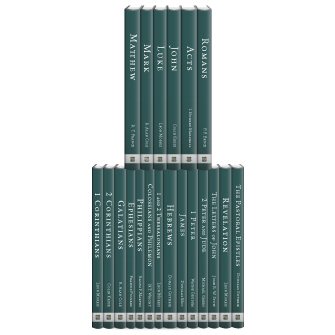
The Tyndale New Testament Commentaries were conceived as a pastorally focused series that would bring careful exegesis within reach of ministers and thoughtful readers who may not have specialist training in the biblical languages. Published by IVP and shaped for many years under the general editorship of Leon Morris, the series reflects a consciously evangelical vision, committed to the authority of Scripture and the clarity of its message for the church.
The tone throughout is restrained, clear, and serviceable. These volumes do not aim to impress through technical display, nor do they shy away from genuine exegetical difficulty. Instead, they model disciplined reading of the text, explaining key interpretive issues without overwhelming the reader. The prose is usually lean and purposeful, shaped by a concern to illuminate the passage rather than to parade scholarly debate.
Theologically, the series sits comfortably within the broadly evangelical tradition, with many volumes written by authors whose instincts are Reformed or Reformed adjacent. Critical scholarship is engaged respectfully, but rarely allowed to dominate. The controlling concern is what the text says and how it should be understood within the canon of Scripture.
For preachers, the Tyndale series has long functioned as a trusted companion. It helps a pastor see the shape of a passage, grasp its main thrust, and avoid obvious missteps. While it does not attempt full sermon development, it consistently serves proclamation by clarifying meaning and emphasis.
A major strength of the series is clarity. Difficult ideas are explained simply, without distortion or reduction. This makes the volumes especially useful in the pressured rhythms of pastoral ministry.
The focus on the flow of argument is another asset. Many authors pay close attention to how paragraphs and sections work together, which aids sermon structure and helps preachers trace the author’s line of thought.
Theological restraint is also commendable. Conclusions are usually well judged, resisting speculation and keeping close to the text. This steadiness builds confidence in regular use.
Limitations & Cautions
By design, the series is not comprehensive. Pastors looking for detailed interaction with Greek syntax or extended engagement with scholarly debates will often need to look elsewhere.
There is some unevenness across volumes, reflecting the long lifespan of the series. Earlier contributions occasionally show their age, particularly in interaction with more recent scholarship.
Application is generally implicit rather than explicit. Readers must still do the work of moving from explanation to proclamation.
How to Use This Series
The Tyndale commentaries are best consulted early in sermon preparation, once the passage has been read carefully and its main questions identified. They help set bearings before deeper study begins.
They are particularly useful for gaining a clear overview of a passage and confirming the basic direction of interpretation. Used at this stage, they can prevent wasted effort later.
Pastors will benefit from pairing Tyndale volumes with either more technical works or more overtly pastoral commentaries, depending on need. The series works best as a steady guide rather than a final authority.
Standout Volumes
Several volumes have earned enduring trust, including Leon Morris on John, John Stott on Romans and Galatians, and Gordon Fee on First Corinthians. These combine clarity with theological depth and a strong sense of the text’s purpose.
More recent revisions, such as those by R T France on Matthew and Eckhard Schnabel on Mark, have strengthened the series further by combining accessibility with up to date scholarship.
Weaker or Less Helpful Volumes
Some of the earliest volumes feel thin by modern standards, offering less engagement with literary structure or theological synthesis. A few shorter epistles receive particularly brief treatment.
That said, even the weaker volumes are rarely misleading. The limitations are usually ones of scope rather than direction.
Series in Context
Compared with the New International Commentary series, Tyndale is far more accessible and far less detailed. NIC volumes are better suited to extended study, while Tyndale serves quicker orientation.
Alongside the Bible Speaks Today series, Tyndale is more exegetical and less homiletical. Pastors will often find the two complement one another well.
Choose Tyndale when clarity, speed, and reliability are needed without technical overload.
We find this volume on Philippians a clear guide through a letter full of joy, courage, and Christ centred ambition. It helps us keep the argument visible, especially the way Paul joins deep doctrine to a life shaped by humility, unity, and hopeful endurance.
The Tyndale strengths are evident, it is readable, it stays close to the passage, and it keeps moving. That makes it particularly useful when we are preparing sermons in a busy week.
Why Should I Own This Commentary?
We should own this commentary when we want help preaching Philippians as more than a set of favourite verses. It serves us well on the hymn in Philippians 2, the partnership language, and the call to rejoice without denial of suffering.
We also benefit from its balanced application. It presses for obedience that flows from grace, and it keeps Christ’s example and lordship at the centre of our pastoral use of the letter.
Closing Recommendation
We recommend this as a strong mid level resource for preaching and teaching Philippians, especially for pastors who want clear guidance that remains close to the text.
We find Darrell L. Bock’s Ephesians a compact, clear guide through a letter that moves from God’s saving purpose in Christ to a new life together as the church. He helps us trace Paul’s argument and keep the big themes in view, grace, unity, holiness, and spiritual warfare in ordinary discipleship.
The volume is accessible and well suited to weekly preparation, with steady attention to context and structure.
Why Should I Own This Commentary?
We should own this commentary when we want help preaching Ephesians with clear movement from doctrine to life. Bock is especially useful in keeping application tethered to the text, so that unity and holiness are grounded in the gospel, not in mere exhortation.
We also appreciate the balanced handling of contested sections. He helps us make responsible interpretive decisions while keeping the letter’s pastoral aim clear, that the church would live as Christ’s new humanity.
Closing Recommendation
We recommend this as a strong mid level Ephesians commentary for preaching and teaching, especially for pastors who want a clear, disciplined guide that stays close to Paul’s purposes.
We find R. Alan Cole’s Galatians a concise, focused guide to Paul’s defence of the gospel of grace. He helps us see the letter’s urgency and its pastoral aim, to guard the church from distortion and to keep our confidence in Christ alone.
The commentary is brief enough to use quickly, yet pointed enough to clarify the argument and its implications.
Why Should I Own This Commentary?
We should own this volume when we need a straightforward companion for preaching Galatians. Cole helps us follow Paul’s line of thought on justification, the promise to Abraham, the law’s purpose, and life by the Spirit.
We also appreciate the way it supports proclamation. It presses us to preach grace with clarity and to call for Spirit shaped freedom, not self made religion.
Closing Recommendation
We recommend this as a useful mid level resource for preaching and teaching Galatians, especially when we want a concise volume that still keeps the gospel edge sharp.
We find Thomas R. Schreiner’s 1 Corinthians a clear, firm, and pastorally aware guide through a letter full of real church problems. He helps us see Paul’s consistent concern, that the gospel reshapes a divided, confused, and morally pressured congregation.
The writing is direct and well organised, with careful attention to argument and context across the whole letter.
Why Should I Own This Commentary?
We should own this commentary when we need help preaching difficult sections with courage and clarity. Schreiner handles disputed passages with measured judgement, and he helps us keep the letter’s main line visible, Christ crucified, the Spirit’s work, and love that builds up the church.
We also benefit from the pastoral emphasis. Application is not bolted on, it arises naturally from Paul’s purposes, which helps us speak to modern churches with both truth and tenderness.
Closing Recommendation
We recommend this as a strong mid level commentary for preaching and teaching 1 Corinthians, especially for pastors who want clear guidance through the letter’s most contested chapters.
We find David E. Garland’s Romans a clear guide through a dense letter, helping us follow Paul’s argument without losing the pastoral aim. He keeps the gospel centre in view and helps us see how doctrine fuels worship, unity, and a transformed life.
The commentary is structured in a way that supports weekly preparation, and it handles complex sections with a calm steadiness.
Why Should I Own This Commentary?
We should own this volume when we want help translating Romans into faithful proclamation. Garland keeps the logic moving, paragraph by paragraph, and he helps us avoid both shallow slogans and endless detours.
We also appreciate the pastoral realism. He helps us preach justification, union with Christ, life in the Spirit, and Christian ethics as truths that shape a congregation, not merely ideas to defend.
Closing Recommendation
We recommend this as a strong mid level Romans commentary for preaching and teaching, particularly for pastors who want clear structure and usable application grounded in the passage.
We find I. Howard Marshall’s Acts a classic Tyndale volume, offering clear explanation and a steady grasp of Luke’s purpose. He helps us see Acts as the story of the risen Christ advancing His gospel by the Spirit, through ordinary servants and often through suffering.
The tone is practical and church facing. We are helped to read Acts as Scripture that shapes worship, mission, and endurance.
Why Should I Own This Commentary?
We should own this commentary when we want guidance that keeps us close to the narrative and alert to theology. Marshall handles speeches, travel sections, and controversies with clarity, and he resists turning Acts into a set of programmes.
We also benefit from the balance in application. He helps us honour the book’s redemptive historical uniqueness, while still drawing out faithful patterns for prayerful witness and congregational life.
Closing Recommendation
We recommend this as a strong mid level Acts commentary for preaching and teaching. It remains a useful companion for series work and for sharpening our categories in mission texts.
We find Colin G. Kruse’s John a measured, text led guide that helps us follow the Gospel’s themes of belief and unbelief, revelation and response. He is attentive to John’s structure and to the way the narrative presses for faith in the Son.
Kruse writes with restraint and clarity. We are given help that serves the pulpit without demanding that every sermon become a seminar.
Why Should I Own This Commentary?
We should own this commentary when we need dependable guidance through key passages and big themes, signs, glory, new birth, the Spirit, and the cross as the climactic revelation of God’s love and justice.
We also appreciate his pastoral instinct. He keeps application tethered to the text’s purpose, which helps us avoid both speculation and moralism in John.
Closing Recommendation
We recommend this as a strong mid level John commentary for preaching and teaching, particularly for those who want clear, sensible decisions and a steady Christ focused emphasis.
We find Nicholas Perrin’s Luke a fresh, careful entry in the Tyndale series, helping us hear Luke’s orderly testimony with a pastor’s ear. He keeps the narrative moving and shows how Luke builds confidence in Jesus through history, fulfilment, and Spirit empowered mission.
We are helped by the balance, it is accessible without being thin, and it repeatedly highlights what matters most in the passage.
Why Should I Own This Commentary?
We should own this commentary if we want help preaching Luke as a coherent Gospel, not a set of isolated scenes. Perrin tracks themes like prayer, reversal, mercy, repentance, and the joy of salvation, with steady attention to context.
We also benefit from the tone. It is reverent, clear, and aimed at the church, which makes it a good tool for shaping sermons that both instruct and shepherd.
Closing Recommendation
We recommend this as a strong mid level Luke volume for preaching and teaching. It is especially helpful for pastors who want clarity on the text’s flow and confident direction for application.
We find Eckhard J. Schnabel’s Mark a substantial contribution to the Tyndale series, with a clear line through the narrative and careful handling of context. He helps us follow Mark’s urgency and his focus on Jesus’ authority, suffering, and the call to discipleship.
The writing is organised and purposeful. We are guided through the text in a way that supports proclamation, not merely information.
Why Should I Own This Commentary?
We should own this commentary when we want Mark to shape the sermon’s direction, rather than importing our favourite themes. Schnabel is attentive to repeated motifs, pacing, and the way Mark uses action and conflict to reveal who Jesus is.
We also appreciate his measured engagement with interpretive questions. He does not hide difficulties, but he helps us keep the main message clear, which is vital for preaching a Gospel that moves and lands.
Closing Recommendation
We recommend this as a strong mid level resource for preaching Mark, especially when we want a fuller Tyndale volume that still reads well. It is a wise companion for series work.
We find R. T. France a steady companion in Matthew, with a calm confidence in the text and a clear sense of the Gospel’s flow. He helps us track Matthew’s portrait of Jesus as the promised King, and he keeps the Old Testament setting in view without turning the commentary into a background lecture.
This volume has the Tyndale strengths, it is readable, it is focused, and it stays close to the passage. That makes it a helpful tool when we need clarity and proportion in weekly preparation.
Why Should I Own This Commentary?
We should own this commentary if we want careful explanation that does not bog down in endless dispute. France is especially useful when Matthew’s themes stack up quickly, fulfilment, kingdom, discipleship, judgement, mercy, and the shape of true righteousness.
We also benefit from his restrained pastoral instinct. He helps us preach Matthew with weight and warmth, pressing for obedience that flows from grace, and keeping the person of Christ front and centre.
Closing Recommendation
We recommend this as a strong mid level volume for preaching and teaching Matthew. Pair it with a more technical work if you need deeper detail on specific debates, but for clear exposition this volume regularly serves us well.