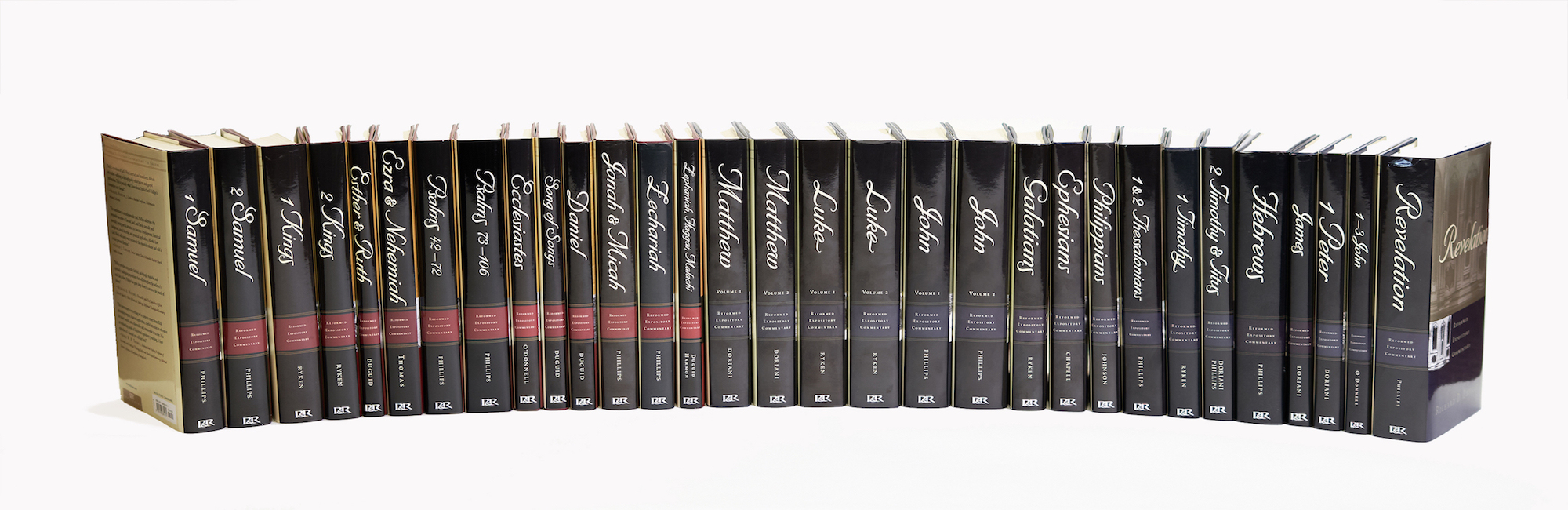
The Reformed Expository Commentary series is shaped by a clear and deliberate vision. It aims to serve the preaching task of the local church by offering exposition that is doctrinally Reformed, text driven, and consciously oriented toward proclamation. Under the general editorship of Richard D. Phillips and Philip Graham Ryken, the series reflects a shared conviction that careful exegesis should lead naturally and responsibly toward preaching that nourishes faith and strengthens the church. The involvement of P and R Publishing reinforces this identity, situating the series within a confessional Reformed tradition that prizes clarity, reverence for Scripture, and pastoral seriousness.
Across the volumes, the tone is consistently earnest and church facing. These are not commentaries written primarily for the academy, nor are they devotional reflections detached from the text. Instead, they operate in the space many pastors inhabit week by week, seeking to understand the passage faithfully, trace its theological contours, and communicate it with conviction to real congregations. The prose generally moves at a preaching pace, attentive to structure, argument, and redemptive emphasis without becoming weighed down by technical detail.
The theological drift of the series is steady and recognisably Reformed, marked by confidence in the authority of Scripture, a strong doctrine of grace, and a concern to read each passage within the wider purposes of God. There is a noticeable commitment to canonical context and to the unity of the Bible, though the method remains grounded in the immediate text rather than abstract biblical theology. This gives the series a reassuring theological coherence while leaving room for authorial voice and emphasis.
Pastorally, the series proves especially useful for those engaged in regular expository preaching. It offers help with outlining, emphasis, and theological framing, often clarifying what truly matters in a passage and why it should be preached. While it does not replace more technical commentaries, it frequently does the harder homiletical work of showing how sound interpretation becomes faithful proclamation. For many pastors, this will make it a dependable companion rather than a reference tool consulted only occasionally.
A theologically steady, pastorally alert series that serves the preaching task with clarity and restraint. Best used as a bridge between careful study and faithful proclamation.
One of the most consistent strengths of the series is its clarity of exposition. Authors typically handle the flow of the biblical text with care, helping readers see how arguments develop and how sections hang together. This structural attentiveness serves preachers well, particularly when shaping sermons that need both coherence and momentum.
The series also excels in theological steadiness. Doctrinal reflection is integrated naturally into the exposition rather than bolted on, and the Reformed framework informs the reading of the text without overwhelming it. This results in commentary that feels anchored and trustworthy, especially for pastors who want confidence that theological instincts are sound.
Another notable strength is pastoral instinct. Many volumes demonstrate a clear awareness of congregational realities, anticipating questions, pressures, and misunderstandings that arise in preaching. Applications tend to grow organically out of the text, often restrained but pointed, helping preachers bridge the gap between ancient Scripture and present hearers.
Limitations & Cautions
The most obvious limitation of the series is its unevenness across volumes. While the editorial vision is clear, individual authors vary in depth, sharpness, and literary energy. Some volumes feel especially rich and compelling, while others remain serviceable but less memorable.
At times, the desire to remain accessible means that exegetical discussion can feel compressed. Pastors who want sustained engagement with interpretive debates, linguistic detail, or alternative readings will often need to supplement with more technical works. The series assumes a certain level of trust in the author’s judgment rather than inviting the reader into every exegetical decision.
There are also moments where application feels restrained to the point of caution. This will suit many readers, but some may wish for bolder engagement with contemporary issues or more explicit pastoral pressing of the text’s claims. The series prioritises faithfulness and steadiness over rhetorical punch.
How to Use This Series
The Reformed Expository Commentary series is best consulted after initial work in the biblical text. It rewards readers who have already wrestled with structure and meaning, helping to refine emphasis and confirm interpretive direction. Used too early, it may shape sermons prematurely, but used wisely, it sharpens judgment and focus.
It is particularly strong in the stage where a preacher is asking what must be said from this passage and why. The series often clarifies the theological weight of a text and helps preachers resist distractions or secondary themes that can dilute sermons. Its outlines and exposition can be adapted rather than adopted, serving as a guide rather than a script.
Pastors will benefit most when they pair this series with at least one more technical commentary. Doing so allows the Reformed Expository volumes to function as a bridge from exegesis to proclamation, drawing together study and sermon in a way that respects both disciplines.
Standout Volumes
Several volumes stand out for their combination of clarity, theological depth, and pastoral sensitivity. Works by Richard D. Phillips and Philip Graham Ryken often exemplify the series at its best, especially in narrative and doctrinally rich books where redemptive themes are prominent. Daniel M. Doriani’s contributions likewise tend to be particularly strong, marked by careful structure and preaching awareness.
More generally, the series appears strongest in books that lend themselves to sustained theological reflection alongside narrative flow. In these areas, the authors are able to show how careful reading naturally leads to clear proclamation, fulfilling the stated aim of the series with confidence.
Weaker or Less Helpful Volumes
he series is broadly consistent in quality, though some volumes feel thinner in engagement or less incisive in exposition. These weaker entries are rarely poor, but they may not rise above adequacy, especially when compared with stronger contributions in the same set.
Such unevenness reflects authorial difference rather than editorial failure. Readers will find that familiarity with the stronger volumes helps set expectations and encourages selective use where a particular book or author proves less helpful.
Series in Context
Compared with more technical series, such as those aimed primarily at scholars, the Reformed Expository Commentary series is intentionally less detailed and less engaged with academic debate. Its focus is narrower and more pastoral, prioritising clarity for preaching over exhaustive analysis.
In contrast with broadly evangelical or devotional series, it offers greater theological density and a more disciplined commitment to authorial intent. Pastors who want exposition shaped by Reformed convictions without entering specialist scholarship will often find this series a better fit.
A pastor should choose this series when the primary goal is sermon preparation rather than academic research. It is particularly well suited to those preaching weekly who need help moving faithfully from text to pulpit.
We find this volume a strong aid for preaching Psalms, particularly for helping us read the Psalms as prayer and praise shaped by covenant faith.
It gives us clear sense of genre, movement, and pastoral purpose, and it helps us handle lament and confidence without sentimentality.
Why Should I Own This Commentary?
We should own it when we want help preaching the Psalms as Scripture for the gathered church. It encourages us to read carefully, then to pray and proclaim with honesty.
It is also practical. We are helped with structure and emphasis, which matters when a psalm turns quickly from complaint to hope.
Closing Recommendation
We recommend it as a strong mid level expositional help for these Psalms, especially for pastors seeking clear guidance for sermon shape and pastoral application.
We find this commentary a pastoral companion for preaching Job, helping us follow the argument, feel the emotional weight, and resist quick answers.
It keeps God’s sovereignty and wisdom central, and it helps us preach suffering in a way that comforts the afflicted and humbles the self assured.
Why Should I Own This Commentary?
We should own it when we need help handling long speeches and repeated cycles. The commentary keeps the flow visible and clarifies what each voice contributes.
It also aids application. We are guided toward patient, reverent preaching that honours lament and leads hearers toward trust rather than tidy explanations.
Closing Recommendation
We recommend it as a strong preaching resource for Job, particularly for pastors who want help preaching with both truth and tenderness.
We find this commentary a sensible guide for preaching Esther, helping us track providence, courage, and the protection of God’s people without forcing the book into simplistic categories.
It keeps the narrative tension clear and helps us handle ethical knots with care, while still pressing the comfort that the Lord preserves His purposes.
Why Should I Own This Commentary?
We should own it when we are preparing to preach a book that is often mishandled. It helps us avoid both thin moralism and speculative readings.
It also supports sermon clarity. We are given firm textual anchors and measured pastoral application that speaks to fear, identity, and steadfastness.
Closing Recommendation
We recommend it as a strong mid level aid for preaching Esther and Ruth, especially for pastors who want clear narrative handling and Reformed steadiness.
We find this commentary a helpful guide for preaching Ezra, with particular strength in showing how word, worship, and covenant renewal shape a restored community.
It handles opposition and discouragement with pastoral realism, and it keeps the emphasis on God’s faithfulness rather than human heroics.
Why Should I Own This Commentary?
We should own it when we need help preaching rebuilding without turning it into a leadership manual. The text is allowed to speak about holiness, worship, and perseverance under pressure.
It also assists sermon planning. We are helped to see the book’s movements and the spiritual purpose behind reforms and renewed obedience.
Closing Recommendation
We recommend it as a strong preaching companion for Ezra and Nehemiah material, particularly when we want application that stays tethered to the passage.
We find this commentary to be a clear guide for preaching 2 Samuel, keeping the narrative flow visible and helping us see what the Lord is teaching through leadership, covenant, and the cost of sin.
It keeps us from flattening the stories into slogans, and it repeatedly draws us back to the text’s own emphases, particularly the Lord’s purposes that stand over kings and people alike.
Why Should I Own This Commentary?
We should own it when we want help preaching narrative with discipline. 2 Samuel can become either mere biography or constant warning, this book helps us read with theological balance and pastoral realism.
It is also useful for sermon shaping. We are given clear sections, clear stakes, and steady application that presses toward humble faith rather than mere moral resolve.
Closing Recommendation
We recommend it as a strong preaching companion for 2 Samuel. Pair it with a more technical volume when you need deeper discussion on textual or historical questions.
We find this commentary to be a clear guide for preaching 1 Samuel, keeping the narrative flow visible and helping us see what the Lord is teaching through leadership, covenant, and the cost of sin.
It keeps us from flattening the stories into slogans, and it repeatedly draws us back to the text’s own emphases, particularly the Lord’s purposes that stand over kings and people alike.
Why Should I Own This Commentary?
We should own it when we want help preaching narrative with discipline. 1 Samuel can become either mere biography or constant warning, this book helps us read with theological balance and pastoral realism.
It is also useful for sermon shaping. We are given clear sections, clear stakes, and steady application that presses toward humble faith rather than mere moral resolve.
Closing Recommendation
We recommend it as a strong preaching companion for 1 Samuel. Pair it with a more technical volume when you need deeper discussion on textual or historical questions.
We find this volume set to be a steady, text led companion for preaching Genesis, with a clear instinct for the shape of the narrative and the covenant promises that drive it forward.
It helps us follow the movement from creation to the patriarchs without rushing the hard questions or losing the storyline that prepares us for the gospel.
Why Should I Own This Commentary?
We should own it when we need help holding together narrative detail and theological weight. Genesis is often preached either as moral examples or as detached debates, this commentary keeps us close to what the passage is doing.
It also supports sermon structure. We are regularly helped to see the main line, the turning points, and the pastoral pressure of the text on faith, worship, and obedience.
Closing Recommendation
We recommend it as a strong mid level expositional help for a Genesis series, especially when we want a Reformed voice that is calm, reverent, and practically useful.
Philip Graham Ryken’s volume on 1 Timothy in the Reformed Expository Commentary series offers a rich blend of faithful exposition, pastoral warmth, and theological depth. Written from a clearly Reformed and Christ-centred perspective, it aims to help preachers and teachers handle Paul’s words with clarity and conviction. Ryken moves carefully through the text, explaining its meaning, tracing its redemptive themes, and applying it wisely to the life of the church.
The commentary is built around sermons that have been refined for publication, giving it a natural, engaging flow. Ryken consistently focuses on the pastoral heart of 1 Timothy—sound doctrine, godly leadership, ordered worship, and the call to live as God’s household in a confused world.
Why Should I Own This Commentary?
We appreciate Ryken’s ability to teach with both depth and accessibility. His exposition is clear, rooted in the text, and consistently Christ-focused. He handles difficult passages—including eldership, pastoral qualifications, false teaching, and the role of men and women in the church—with admirable balance and pastoral sensitivity.
This volume shines in its practical application. Ryken does not merely explain what Paul says; he shows how it shapes the life, mission, and health of a local congregation. Preachers will find ready-to-use structure, memorable phrasing, and theological clarity that serves both pulpit and people.
The commentary is also filled with biblical connections, doctrinal reflection, and historical insight, all communicated with the gentle clarity that marks the REC series. While not a technical commentary, it stands as one of the best pastoral expositions available on 1 Timothy.
Closing Recommendation
We warmly recommend this commentary to pastors, elders, ministry trainees, and any believer seeking to understand 1 Timothy with pastoral depth. It is especially valuable for those preparing to teach through the Pastoral Epistles in a local church setting.
Ryken’s contribution is faithful, nourishing, and deeply aligned with Reformed convictions—an excellent resource for Christ-centred ministry.