
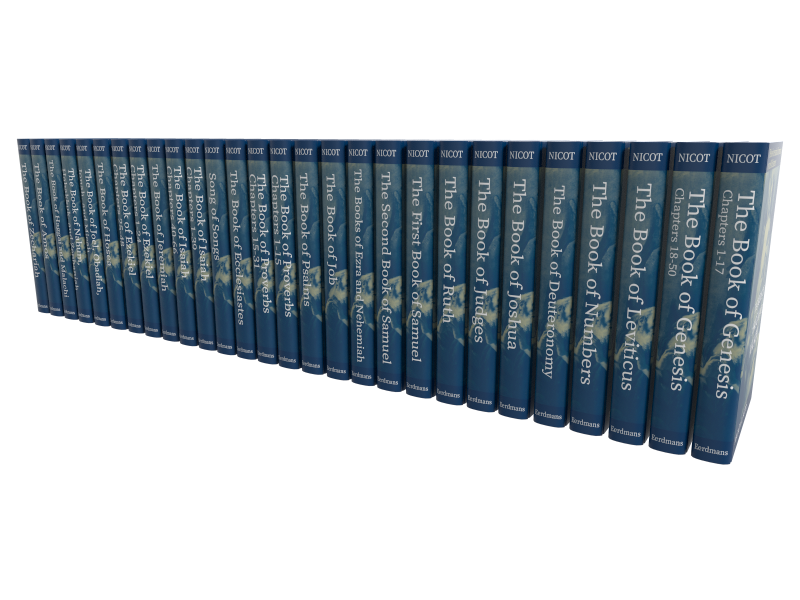
New International Commentary On The Old Testament

New International Commentary On The Old Testament

The New International Commentary on the Old Testament (NICOT), published by Eerdmans, is a landmark series devoted to serious, evangelical exposition of the Hebrew Scriptures. Aimed primarily at pastors, students, and scholars, it seeks to bridge rigorous academic study with reverent theological reflection. Each volume provides a verse-by-verse interpretation of the biblical text grounded in the original languages, yet written with pastoral sensitivity and clarity. The series now spans over thirty volumes, covering nearly every book of the Old Testament.

NICOT’s strengths lie in its careful attention to linguistic detail, historical context, and theological coherence. Contributors are leading evangelical scholars, each committed to the authority of Scripture and the integrity of critical scholarship. Their work models how faith and intellect may coexist fruitfully in the service of biblical interpretation.

Together with its companion New Testament series (NICNT), NICOT remains one of the most respected and enduring commentary sets available—trustworthy, thorough, and deeply edifying for all who teach and love the Word of God.

Series Editor: Robert L. Hubbard

Reset

The Books Of Ezra & Nehemiah

Mid-levelAdvanced students / scholars, Busy pastors, Pastors-in-trainingTop choice
9.0

Summary

Ezra & Nehemiah by Hannah K. Harrington brings renewed life and clarity to the story of Israel’s return from exile. Harrington reads these books as the account of a people restored — temple rebuilt, walls raised, faith renewed — and unfolds the narrative as part of God’s faithful unfolding of covenant promises. She refuses simplistic restoration-myths; instead she shows the complex social, political, and spiritual pressures at work and highlights how God’s mercy and sovereignty preserve his people amid brokenness and struggle.

The commentary engages carefully with the Hebrew-Aramaic text, background history, and literary structure. Where passages pose difficulties — genealogies, reforms, community identity — Harrington does not dodge the questions but treats them with honesty and respect for the text. Yet her primary concern remains pastoral and ecclesial: she draws lines from the original context to the needs of Christ’s church, showing how themes of holiness, corporate identity, covenant, worship, and community renewal resonate for believers today.

For pastors, Bible-teachers, and serious students, this volume offers not only reliable exegesis but a vision for applying Ezra and Nehemiah in a gospel-shaped, church-oriented way. It helps readers see the exile isn’t just ancient history — it’s part of God’s unfolding redemption story, and a reminder of the calling of God’s people in every age.

Why Should I Own This Commentary?

First, it is rooted firmly in the original languages and solid historical-cultural scholarship. Harrington carefully treats linguistic issues, Persian-period context, and the challenges inherent in restoration narratives. This makes the book reliable for preaching or teaching with confidence in the text’s meaning and background.

Second, it is deeply pastorally sensitive and church-centred. Harrington writes with concern for believers, churches, and communities, emphasising how the themes of Ezra and Nehemiah — covenant renewal, communal holiness, worship, identity under God — speak into modern church life. For a preacher wrestling with how to teach restoration, repentance, and community rebuilding, this commentary provides wise guidance.

Third, the prose remains accessible and uncluttered. Harrington avoids unnecessary technical jargon or over-complex scholarly detours, making the volume serve not just scholars but pastors, small-group leaders, and lay readers. Its balance of depth and clarity makes it a practical addition to any teacher’s library.

Closing Recommendation

We recommend Ezra & Nehemiah by Hannah K. Harrington as a top-tier, preacher-friendly commentary. It combines solid exegesis, thoughtful historical grounding, and pastoral insight in a way that honours Scripture and serves the church. For anyone seeking to teach or preach these challenging but hopeful books, this volume is a lasting treasure.

🛒 Purchase here

The Book Of Ruth

Mid-levelAdvanced students / scholars, Busy pastors, Pastors-in-trainingTop choice
9.0

Summary

Ruth by Peter H. W. Lau in NICOT offers a careful, faithful reading of one of Scripture’s most tender and theologically rich narratives. Lau walks through the Hebrew text with sensitivity to structure, context, and nuance, and brings out the story’s themes of loyalty, kindness, covenant, and redemption in ways that speak powerfully to the church. He balances close exegesis with a pastoral vision that sees Ruth’s story as both ancient history and living Word for Christian communities today.

Rather than treating Ruth as a quaint personal story, Lau presents it as a theologically loaded narrative — a story about God’s providence, covenant faithfulness, and the inclusion of outsiders in God’s people. His commentary highlights how God preserves and blesses his people through unexpected relationships and faithful love, pointing toward the gospel promise of belonging and grace. The book becomes not just a historical tale but a mirror for God’s church, reminding us of kindness, redemption, and faith under God’s covenant.

Why Should I Own This Commentary?

First, it is rooted deeply in the Hebrew text and informed by contemporary scholarship. Lau handles translation issues, textual variants, and ancient Near-Eastern background with care, making this commentary reliable for serious study and sermon preparation. For any preacher wanting to engage Ruth responsibly, this volume provides solid exegetical groundwork.

Second, the commentary is pastorally sensitive and church-centred. Lau writes for preachers, teachers, and congregations — not merely scholars. He draws practical and theological application from the text, showing how themes like loyalty, redemption, and covenant love should shape Christian communities. This makes the work especially useful for sermon preparation, small-group teaching, or personal reflection.

Third, the writing is accessible without sacrificing depth. Lau avoids unnecessary jargon or distraction, keeping his exposition clear and engaging. This makes the commentary valuable for a broad audience: pastors, lay teachers, students, and mature readers alike. It strikes a balance between faithful scholarship and practical ministry concerns.

Closing Recommendation

We strongly recommend Ruth by Peter H. W. Lau as a top-level, preacher-friendly commentary. It combines solid scholarship, theological depth, and pastoral insight in a way that serves the church faithfully. If you want a commentary on Ruth that honours the text, strengthens your faith, and supports gospel-centred teaching and preaching, this volume is an excellent choice.

🛒 Purchase here

The Book Of Judges

Mid-levelAdvanced students / scholars, Busy pastors, Pastors-in-trainingTop choice
9.0

Summary

Judges by Barry G. Webb brings one of the Bible’s most turbulent and morally complex books into careful, faithful clarity. Webb reads Judges as a unified narrative – not a disjointed anthology – and traces its cycles of faith, apostasy, deliverance and chaos with keen literary sensitivity. He helps the reader see how the stories of judges, débacles and deliverances reveal God’s holiness, human failure, and the fragile stability of life under grace.

He does not shy away from the difficult aspects of Judges: the violence, rough justice, morally ambiguous characters, and the grim moral cycles. Yet Webb reads these not as mere ancient folklore or distant history, but as deeply theological warnings and prophetic foreshadows for the church. His treatment honours the text without sensationalising it; the focus remains on the Lord who judges, redeems, and calls his people to repentance and faith.

As a result, the commentary becomes a sermon toolkit: it helps pastors and teachers wrestle with Judges’ darkness and hope, and to preach it in a way that rings true to Scripture and touches hearts. Webb’s balance of scholarly care and pastoral concern makes this volume a rare gift for those tackling Judges in the pulpit or Bible study.

Why Should I Own This Commentary?

First, Webb offers a serious, verse-by-verse commentary rooted in the text, aware of its Hebrew background and historical complexity. His literary and structural reading helps readers spot patterns, themes and theological intent that many casual readers miss. It is reliable for sermon preparation and teaching that seeks to do justice to the depth and tension of Judges.

Second, the tone is pastoral and church-oriented. Webb does not treat Judges as a morbid curiosity or archaic saga. Instead, he frames its stories as warnings and lessons for God’s people today: on covenant faithfulness, justice, community failure, and reliance on God’s mercy. That makes this commentary especially helpful for preaching hard truth in contemporary congregations.

Third, the work achieves a healthy balance between scholarship and readability. While there is sufficient detail for serious study, the writing remains fluid and engaging, avoiding excessive technical jargon that might bog down sermon prep or lay reading. It respects both the academy and the church.

Closing Recommendation

If you are preparing to preach or teach Judges, this commentary should be high on your shelf. It combines sober exegesis, theological insight, and pastoral sensitivity in a way that both honours the text and serves the church. For pastors, teachers and Bible-study leaders, Judges by Barry G. Webb is a strong, trustworthy companion.

🛒 Purchase here

The Book Of Deuteronomy 1–11

Mid-levelAdvanced students / scholars, Busy pastors, Pastors-in-trainingTop choice
9.0

Summary

Deuteronomy 1–11 by Bill T. Arnold offers a fresh and substantial entry into the foundational book of Deuteronomy. Arnold delivers his own modern translation of the Hebrew for these chapters alongside verse-by-verse commentary. His work seeks not only to unpack historical or critical issues, but to show how Deuteronomy remains living Scripture for the church: shaping worship, obedience, covenant faithfulness, and reverent fear of the Lord.

The commentary combines careful scholarship – textual concerns, ancient Near Eastern context, Hebrew literary form – with a pastoral heart. Arnold neither shrinks from difficult questions (law, judgment, covenant demands) nor succumbs to theological reductionism. Instead he draws out the book’s central message: that God’s people are called to love the Lord with all their heart, soul and strength, grounded on his revealed word and covenant promises.

This makes the volume a rich resource for preachers, teachers and serious students who want to build sermons or studies on a solid foundation of exegesis, theology and life application. Arnold helps readers encounter Deuteronomy not as a dusty legal code but as a living word from God, relevant to Christ-centred worship and Christian discipleship.

Why Should I Own This Commentary?

First, it is a verse-by-verse commentary grounded in the Hebrew text and informed by up-to-date historical and literary scholarship. Arnold’s translation is clear and his engagement with textual variants and background issues is serious. This makes it reliable for those who want to handle Deuteronomy responsibly from the pulpit or Bible class.

Second, it is deeply pastorally sensitive. Arnold writes as one concerned for the church: his notes frequently note how ancient covenant demands, blessings and curses relate to the life of faith under Christ. He highlights themes like obedience, covenant love, holiness and social justice in a way that resonates with modern congregations.

Third, the book balances thoroughness and readability. While it’s substantial in length and scope, Arnold is careful to explain his reasoning clearly and without unnecessary jargon. This makes the volume accessible not only to advanced students but to pastors preparing sermons and to committed lay readers seeking depth.

The main limitation is the length and density. Because of the volume’s size and depth, it may be more than a casual reader or small-group leader wants to work through. Also, since this covers only chapters 1–11, one needs to await the second volume for the rest of Deuteronomy. But these are trade-offs for the depth and fidelity the work offers.

Closing Recommendation

We recommend Deuteronomy 1–11 by Bill T. Arnold as a top-tier mid-level commentary. It is especially valuable for pastors and teachers wanting sober scholarship, clear exposition, and faithful application. For preaching, sermon preparation, Bible-teaching or personal study, this volume will serve you well as a reliable guide to Scripture’s gravity and grace.

🛒 Purchase here

The Book Of Leviticus

Mid-levelBusy pastors, Pastors-in-trainingStrong recommendation
8.6

Summary

Gordon Wenham’s contribution to the NICOT series on Leviticus remains one of the most influential treatments of the book in modern evangelical scholarship. We find here a careful, reverent handling of the text that combines linguistic skill, canonical sensitivity, and an evident appreciation for the theological weight of Israel’s sacrificial system. Wenham writes with a clarity that helps pastors and students gain a confident grasp of a book often considered difficult.

The commentary moves steadily through the text, explaining ritual detail without losing sight of Leviticus’ covenantal structure and pastoral purpose. Wenham shows how law, sacrifice, holiness, and worship all emerge from God’s gracious initiative, giving preachers the tools to handle the material with confidence rather than hesitation.

Why Should I Own This Commentary?

Wenham’s work remains valuable because it succeeds at both detailed exegesis and clear theological synthesis. His explanations of ancient Near Eastern background, ritual terminology, and literary shape are consistently measured and free from speculation. This makes the commentary a reliable companion for anyone wanting to preach or teach Leviticus with conviction.

He is particularly strong in tracing the logic of the sacrificial system and the moral vision embedded within Israel’s holiness laws. Throughout, Wenham highlights how these instructions reveal God’s character and point forward to the fulfilment found in Christ, without forcing connections or losing the integrity of the Old Testament text.

For pastors preparing sermons, his structure, concise explanations, and thoughtful theological reflection make difficult passages accessible. For students, the commentary serves as a model of careful evangelical scholarship.

Closing Recommendation

This is a significant and trustworthy volume that has shaped generations of preachers. We gladly commend it to pastors and serious students who want depth without unnecessary technicality. Wenham’s work remains one of the best entry points for anyone preparing to teach Leviticus.

If you intend to spend any length of time preaching from this book, this commentary deserves a place on your shelf.


🛒 Purchase here

The Book Of Genesis Chapters 18-50

Mid-levelAdvanced students / scholars, Busy pastors, Pastors-in-trainingStrong recommendation
8.0

Summary

Victor P. Hamilton’s Genesis 18–50 continues the strengths of his first NICOT volume with the same blend of linguistic precision, narrative sensitivity, and theological depth. We find here a careful and reverent exposition of the patriarchal narratives, tracing Abraham, Isaac, Jacob, and Joseph with a steady commitment to reading the text on its own terms. Hamilton is thorough without being burdensome, technical yet still attentive to the unfolding drama of God’s covenantal purposes.

This volume serves pastors, students, and serious readers who want a responsible and substantial guide to the latter half of Genesis. Hamilton keeps the narrative moving while offering detailed help on key interpretive and theological issues along the way.

Why Should I Own This Commentary?

Hamilton is especially strong in explaining the literary coherence of Genesis 18–50. His work on the Abrahamic narratives, the complex Jacob cycle, and the theological weight of the Joseph story gives preachers firm footing when preparing to teach these rich passages. He handles the Hebrew text with competence, providing insight into structure, repeated motifs, and the flow of the storyline.

We appreciate Hamilton’s measured engagement with critical scholarship: he neither ignores nor idolises academic debates. Instead, he offers readers what they most need—clear explanation, careful exegesis, and a consistent concern to show how the text itself makes sense. His treatment of Joseph, in particular, gives readers a compelling view of God’s providence and covenant fidelity in the midst of human frailty and family conflict.

Although the commentary is more technical than explicitly pastoral, it offers rich material for preaching. Themes such as promise, blessing, reconciliation, and divine sovereignty are consistently and helpfully illuminated.

Closing Recommendation

We warmly commend Genesis 18–50 to pastors and teachers seeking a dependable and thorough companion for the patriarchal narratives. It rewards slow and attentive reading, offering clarity, depth, and theological steadiness throughout.

For those preparing to teach Genesis in depth, Hamilton’s work remains one of the finest and most trustworthy evangelical resources available.


🛒 Purchase here

The Book Of Genesis Chapters 1-17

AdvancedAdvanced students / scholars, Busy pastors, Pastors-in-trainingStrong recommendation
8.0
Bible Book: Genesis
Type: Academic
Publisher: Eerdmans
Theological Perspective: Broadly Evangelical
Resource Type: Commentary

Summary

Victor P. Hamilton’s Genesis 1–17 in the NICOT series is a careful, thorough, and deeply respectful exposition of the opening chapters of Scripture. We find it a work of substantial learning, marked by steady evangelical commitments and a seriousness about reading the text as Scripture rather than merely ancient literature. Hamilton moves patiently through creation, fall, flood, covenant, and the early patriarchal narratives, combining linguistic precision with clear theological observation.

This volume is designed for pastors and students who want to handle Genesis responsibly at a technical level without losing sight of its spiritual and doctrinal significance. It offers clarity on contentious issues while maintaining a tone of humility and restraint.

Why Should I Own This Commentary?

Hamilton’s greatest strength lies in his ability to explain what the text is doing—literarily, theologically, and canonically. His analysis of structure, keyword patterns, and narrative flow provides preachers with a strong foundation for sermon preparation. He is especially helpful on the meaning and movement of Genesis 1–3, the nature of covenant in chapters 9 and 15, and the unfolding promises to Abram.

His engagement with critical scholarship is balanced and measured. Hamilton acknowledges alternative views without allowing them to dominate the commentary. Instead, he keeps the reader anchored in the text itself, showing how the narrative’s theological coherence and literary shape guide responsible interpretation.

This volume is also pastorally useful. Hamilton often highlights themes that echo across the canon—creation’s order and goodness, the depth of human rebellion, the mercy and justice of God, and the faith that marks Abraham’s life. These emphases equip preachers to proclaim Genesis in a way that honours both its ancient context and its place in redemptive history.

Closing Recommendation

We warmly commend Genesis 1–17 by Hamilton as a rich and trustworthy guide for anyone teaching or studying the foundations of Scripture. It requires slow reading, but those who invest the time will find clarity, depth, and theological steadiness.

For pastors, students, and serious readers seeking a substantial evangelical treatment of Genesis, this volume remains one of the finest resources available.


🛒 Purchase here

The Books Of Ezra And Nehemiah

Mid-levelBusy pastors, Lay readers / small groups, Pastors-in-trainingStrong recommendation
8.0

Summary

F. Charles Fensham’s Ezra and Nehemiah in the NICOT series is a steady, text-focused exposition of two books that sit at a crucial moment in the life of God’s people. We find this commentary consistently clear, historically informed, and pastorally aware, offering readers a reliable guide to the return from exile, the rebuilding of temple and walls, and the renewal of worship under Ezra and Nehemiah’s leadership. Fensham writes from a broadly evangelical standpoint, combining academic seriousness with respect for the canonical shape of the text.

The strength of the volume lies in its balance: it deals carefully with historical and linguistic issues while also tracing the theological themes of grace, repentance, covenant identity, and persevering obedience. It serves pastors, students, and thoughtful readers who want a grounded, trustworthy companion to these post-exilic books.

Why Should I Own This Commentary?

Fensham is particularly skilled at reconstructing the historical setting of Ezra and Nehemiah in a way that is both accessible and illuminating. He clarifies the political landscape of the Persian period, the administrative challenges faced by the returning remnant, and the spiritual priorities that shaped their reforms. This background material proves invaluable for preachers who want to help congregations feel the weight and hope of these books.

The commentary offers careful, verse-by-verse exposition without overwhelming the reader with technical digressions. Fensham’s treatment of Ezra’s commitment to the law, Nehemiah’s leadership under pressure, and the people’s rediscovery of their covenant identity provides rich material for pastoral ministry. His explanations of Hebrew terms and textual questions are concise and steady, giving readers confidence without unnecessary complexity.

What also stands out is Fensham’s ability to keep the theological heart of these books in view. He highlights themes of God’s providence, the cost of obedience, the importance of gathered worship, and the need for spiritual renewal among God’s people. These emphases make the commentary especially helpful for ministers seeking to apply Ezra and Nehemiah in a contemporary church context.

Closing Recommendation

We warmly commend Ezra and Nehemiah by Fensham as a clear, faithful, and pastorally useful commentary. It may not be the most technical volume available today, but it excels in clarity, balance, and theological steadiness—qualities that serve preachers exceptionally well.

For those preparing to teach or preach these books, this NICOT volume remains one of the most dependable and accessible evangelical treatments available.


🛒 Purchase here

The Second Book Of Samuel

AdvancedAdvanced students / scholars, Busy pastors, Pastors-in-trainingStrong recommendation
7.8
Bible Book: 2 Samuel
Type: Academic
Publisher: Eerdmans
Theological Perspective: Broadly Evangelical
Resource Type: Commentary

Summary

David Toshio Tsumura’s Second Samuel in the NICOT series is a deeply learned, text-driven exposition of one of the Old Testament’s most gripping and theologically charged narratives. We find it a commentary shaped by rigorous linguistic expertise, steady evangelical commitments, and a clear desire to help readers understand the canonical form of the text. Tsumura works patiently through the book’s structure, characters, and historical setting, giving pastors and students a strong foundation for responsible interpretation.

This volume pays careful attention to the Hebrew text while remaining accessible to those who are willing to read slowly. It offers clarity on difficult passages, avoids speculative reconstructions, and highlights the theological currents—sin, judgement, mercy, kingship, and covenant faithfulness—that run through the life of David and the life of Israel.

Why Should I Own This Commentary?

The great strength of Tsumura’s work lies in its precision. His analysis of Hebrew narrative, idioms, and structure helps preachers avoid common missteps and handle the text with integrity. Whether addressing David’s triumphs, moral failures, or the complexities of court politics, Tsumura consistently draws attention to what the text says rather than what later assumptions impose upon it.

He engages scholarship with balance, interacting with critical views without allowing them to dictate the shape of his exposition. The result is a commentary that is academically trustworthy yet pastorally grounded. His thematic sensitivity—particularly around divine sovereignty, human frailty, and the unfolding of God’s purposes—provides rich material for preaching.

Although this is a technical commentary at heart, Tsumura writes with clarity, giving readers confidence as they move through some of the most difficult and emotionally charged narratives in the Old Testament. It is a volume that rewards careful study and strengthens the preacher’s grasp of the text’s message.

Closing Recommendation

We commend Second Samuel by Tsumura as a substantial and reliable guide for anyone preaching or studying this book. Its depth, steadiness, and refusal to sensationalise the text make it especially valuable for ministers who want to handle these narratives with theological maturity and pastoral care.

For those seeking a commentary that combines scholarly rigour with reverent exposition, this NICOT volume is a strong and enriching companion.


🛒 Purchase here

The Book Of Ruth

Mid-levelBusy pastors, Lay readers / small groups, Pastors-in-trainingStrong recommendation
8.4

Summary

Robert L. Hubbard Jr.’s Ruth in the NICOT series is a beautifully crafted, academically responsible, and pastorally sensitive exposition of this cherished Old Testament book. We find it a commentary that combines rigorous linguistic work with warm theological insight, helping readers appreciate the narrative artistry and covenant theology that shape the story of Ruth. Hubbard writes from a broadly evangelical standpoint, offering a faithful and engaging treatment that serves pastors, teachers, and thoughtful Christians alike.

The commentary highlights the literary sophistication of Ruth while situating it firmly within the larger redemptive storyline. Hubbard’s attention to structure, character development, and the book’s theological themes gives readers a rich understanding of how God’s providence and kindness are woven through the narrative.

Why Should I Own This Commentary?

Hubbard excels at showing how Ruth is far more than a simple love story. He demonstrates its theological depth—its portrayal of loyal love, covenant faithfulness, and the surprising grace of God reaching into the margins of Israel’s life. His exposition helps preachers appreciate how each scene contributes to the book’s movement from emptiness to fullness.

The commentary is especially strong in its analysis of Hebrew narrative technique. Hubbard’s careful work on the text brings clarity to key words, literary motifs, and structural features that shape the book’s impact. Yet he never loses sight of the pastoral importance of the story: the hope it offers to the suffering, the dignity it gives to the overlooked, and the assurance it provides of God’s steadfast commitment to His people.

Hubbard’s engagement with scholarship is balanced and discerning. He interacts with alternative views without overwhelming the reader or distracting from the message of the book. Pastors will benefit from his clear explanations, thoughtful thematic summaries, and sensitivity to the theological richness of Ruth.

Closing Recommendation

We strongly commend Hubbard’s volume as one of the finest evangelical treatments of Ruth available. It offers depth for the preacher, clarity for the student, and warmth for any believer seeking to understand God’s redeeming grace in the everyday details of life.

For those preparing to preach or study Ruth, this commentary provides a trustworthy and illuminating guide—rich, careful, and consistently edifying.


🛒 Purchase here