
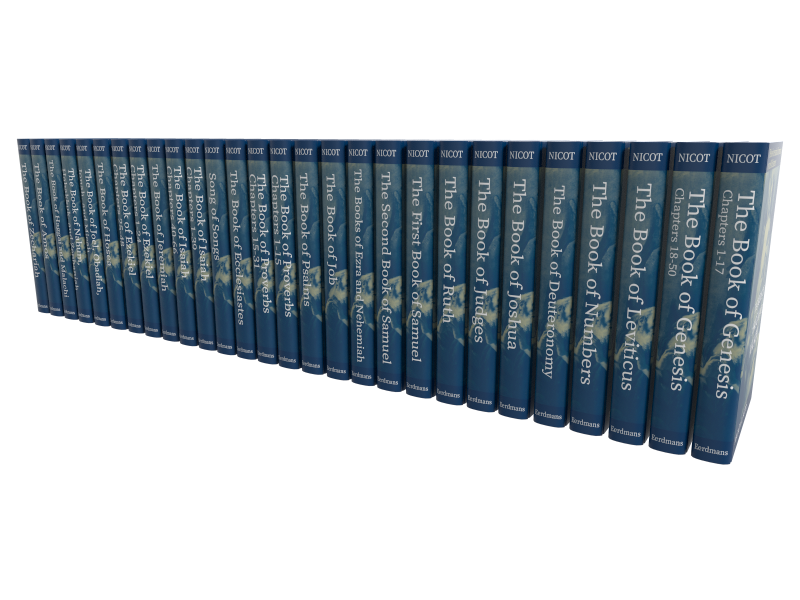
New International Commentary On The Old Testament

New International Commentary On The Old Testament

The New International Commentary on the Old Testament (NICOT), published by Eerdmans, is a landmark series devoted to serious, evangelical exposition of the Hebrew Scriptures. Aimed primarily at pastors, students, and scholars, it seeks to bridge rigorous academic study with reverent theological reflection. Each volume provides a verse-by-verse interpretation of the biblical text grounded in the original languages, yet written with pastoral sensitivity and clarity. The series now spans over thirty volumes, covering nearly every book of the Old Testament.

NICOT’s strengths lie in its careful attention to linguistic detail, historical context, and theological coherence. Contributors are leading evangelical scholars, each committed to the authority of Scripture and the integrity of critical scholarship. Their work models how faith and intellect may coexist fruitfully in the service of biblical interpretation.

Together with its companion New Testament series (NICNT), NICOT remains one of the most respected and enduring commentary sets available—trustworthy, thorough, and deeply edifying for all who teach and love the Word of God.

Series Editor: Robert L. Hubbard

Reset

The Books of Haggai & Malachi

AdvancedAdvanced students / scholars, Busy pastors, Pastors-in-trainingStrong recommendation
8.1

Summary

The Books of Haggai and Malachi by Pieter A. Verhoef is the classic NICOT commentary on these two post-exilic prophetic books. First published in 1987 by Eerdmans, the commentary runs to 384 pages and offers introductions, Hebrew text translation, textual and grammatical notes, and a verse-by-verse exposition of Haggai and Malachi. The volume seeks to situate the prophets in their historical setting following the exile, and to trace their theological and covenantal message for God’s people.

Verhoef attends carefully to the literary structure, the historical background, and the textual witnesses. He deals with questions of authorship, date, compositional unity, and canonical placement. His commentary engages with textual variants and ancient manuscripts, while providing theological reflections that highlight God’s justice, mercy, covenant faithfulness, renewed worship, and call to covenant obedience.

Why Should I Own This Commentary?

These two short prophetic books are often treated superficially or overlooked altogether in many preaching schedules or study plans. Verhoef’s commentary rescues them from neglect by giving them thorough, respectful, and serious scholarly treatment. For pastors or teachers who want to preach or teach Haggai or Malachi with solidity, this volume gives a foundation rooted in Hebrew exegesis and historical awareness.

Though written in the late twentieth century, it still offers valuable insight into the text’s meaning and context. Verhoef combines technical engagement, grammatical, syntactical, textual, with theological sensitivity and pastoral concern. His exposition does not sensationalise but aims to honour the prophetic voice, showing how these books speak of God’s holiness, his covenant demands, his grace, and his renewed promises for his people.

Closing Recommendation

We believe The Books of Haggai and Malachi by Pieter A. Verhoef remains a worthwhile and respectable resource. It is not the newest treatment, but for a pastor or teacher wanting a dependable, serious, evangelical-oriented commentary on these prophets, it still serves well. If your library lacks a grounded, technical-theological treatment of Haggai or Malachi, this commentary is a sound addition.

We recommend it as a dependable, church-useful resource for sermon preparation, personal study, or theological reflection, especially when dealing with the challenges of post-exilic prophecy.

🛒 Purchase here

The Books Of Joel, Obadiah, Jonah, And Micah

AdvancedAdvanced students / scholars, Busy pastors, Pastors-in-trainingStrong recommendation
8.6

Summary

The Books Of Joel, Obadiah, Jonah, And Micah by Leslie C. Allen is the classic NICOT volume that treats these four Old Testament writings together. First issued in 1976 by Eerdmans this commentary runs to approximately 427 pages.

Allen provides a full-length introduction for each book with careful attention to authorship, date, historical context, canonical setting, literary shape and theological thrust. He supplies his own translation of the Hebrew text, offers textual and critical notes, and delivers verse-by-verse commentary. The treatment aims to reconstruct the ancient context and bring theological clarity to issues such as judgment, mercy, covenant faithfulness, and social justice as voiced by these prophets.

Why Should I Own This Commentary?

Joel, Obadiah, Jonah and Micah include material that is often compressed, neglected or superficially treated in pulpits and teaching contexts. This volume honours those books by giving them serious, sustained treatment. Allen does not shy away from the difficulties, textual variants, redactional questions, historical uncertainty—but guides the reader with scholarly responsibility and pastoral care. In doing so he enables preachers and teachers to handle these prophets with confidence and integrity, rather than relying on thumbnail summaries or secondhand outlines.

Equally important, the balance strikes between technical detail and readability. Allen’s own translation and his clear commentary open the Hebrew text to those who may not read Hebrew fluently, while still offering depth for those who do. The theological reflections remain rooted in the Old Testament’s covenant horizon yet point toward the gospel hope embodied in God’s mercy and justice. For those committed to gospel-centred ministry, this work serves as a stable bridge between Hebrew exegesis and preaching or teaching application.

Closing Recommendation

We believe The Books Of Joel, Obadiah, Jonah, And Micah by Leslie C. Allen remains an essential resource for any pastor, teacher, or advanced student seeking to treat these prophets with seriousness and theological integrity. It combines scholarly rigour, textual faithfulness and pastoral sensitivity in a way that few single-volume commentaries on these books have matched.

We confidently recommend it as a foundational tool for sermon preparation, theological reflection, and faithful exposition of the Minor Prophets.

🛒 Purchase here

The Books Of Haggai & Malachi

AdvancedAdvanced students / scholars, Busy pastors, Pastors-in-trainingStrong recommendation
8.3

Summary

The Books Of Haggai & Malachi by Mignon R. Jacobs is the recent NICOT volume covering two often-overlooked prophetic books. Published by Eerdmans in 2017, it spans 423 pages, and provides translations, introductions, contextual analysis and a verse-by-verse commentary on Haggai and Malachi.

Jacobs begins with careful introductions to each book, outlining authorship, date, historical setting, structure and theological thrust. She then supplies her own translation of the Hebrew text with explanatory notes, followed by detailed commentary on the verses. Throughout she engages with alternate scholarly views and intertextual connections, while seeking to treat the prophets as theological voices addressing God’s covenant people in challenging circumstances.

Why Should I Own This Commentary?

For those who preach or teach from the Minor Prophets, Haggai and Malachi often present difficulty because of the brevity of the books and their post-exilic context. Jacobs does not shrink from that challenge. Her volume provides a stable, scholarly foundation enabling pastors and teachers to handle these texts with confidence. The careful historical and literary introduction helps clarify background issues so that the words of the prophets speak clearly and not in hushed confusion.

Moreover Jacobs demonstrates both academic rigor and pastoral sensitivity. She does not force speculative or novel theological agendas. She offers interpretive options but leaves room for faithful application shaped by Scripture and Spirit. This restraint offers integrity and invites careful reflection rather than gimmickry. For ministers who value sound doctrine and careful exposition, this commentary works as a solid bridge between serious scholarship and faithful proclamation.

Closing Recommendation

We believe The Books Of Haggai & Malachi by Mignon R. Jacobs deserves a place on the shelf of any pastor, student or Bible teacher committed to faithful exposition of the prophets. Its clarity, depth, and careful handling of text and context make it a go-to resource when preparing sermons or teaching series from Haggai or Malachi.

We confidently recommend it as a valuable and trustworthy commentary for study, teaching and preaching in the local church.

🛒 Purchase here

The Book Of Zechariah

AdvancedAdvanced students / scholars, Busy pastors, Pastors-in-trainingTop choice
9.0

Summary

The Book of Zechariah by Mark J. Boda is the substantial NICOT volume offering a full-length commentary on the whole prophetic book. First published in 2016 by Eerdmans, it runs to some 936 pages, giving Boda space to explore Zechariah’s text, historical context, structure, literary features and theological message. :contentReference[oaicite:0]{index=0}

Boda combines detailed Hebrew exegesis with sensitive historical reflection and careful canonical awareness. He presents a fresh translation of Zechariah, surveys historical background from the Babylonian exile through the Persian period, and wrestles with compositional and redactional issues — yet argues for unity in the book while acknowledging its complex parts. :contentReference[oaicite:1]{index=1}

Why Should I Own This Commentary?

Zechariah often intimidates pastors and teachers because of its blend of visions, symbolic language, abrupt shifts, and post-exilic context. Boda does not shy away from these difficulties. Instead he guides the reader with clarity and care. His extended introductions to sections, consistent orientation material, and systematic commentary give a stable framework so one does not get lost “in the forest for the trees.” :contentReference[oaicite:2]{index=2}

At the same time his work remains pastorally and theologically sensitive. He grounds Zechariah’s promises of restoration, God’s righteousness, divine sovereignty and hope in covenant faithfulness. He does not indulge in speculative leaps. He invites humble trust in God’s Word and encourages faithful proclamation. For those who hold a Reformed, evangelical and gospel-centered outlook, this volume becomes a dependable bridge between rigorous scholarship and the church’s proclamation needs.

Closing Recommendation

We believe The Book of Zechariah by Mark J. Boda deserves a place on the shelf of any pastor, preacher or serious Bible teacher seeking to handle the prophets faithfully. It is not light reading, but its depth, clarity and pastoral grounding make it a first-rate resource for sermon preparation, theological reflection, or advanced study.

We gladly recommend it as a foundational commentary when you study or preach from Zechariah.

🛒 Purchase here

The Books Of Nahum, Habakkuk & Zephaniah

AdvancedAdvanced students / scholars, Busy pastors, Pastors-in-trainingTop choice
9.0

Summary

The Books of Nahum, Habakkuk and Zephaniah by Thomas Renz is a substantial new volume in the New International Commentary on the Old Testament (NICOT). Published by Eerdmans in June 2021, it offers a verse-by-verse exegesis of the three prophetic books, combined with a rich mix of translation, textual notes, literary analysis, and theological reflection. Alongside careful historical and canonical discussion, Renz engages the poetry of Nahum, the difficulty of Habakkuk 3, and the complex setting of Zephaniah, seeking to honour both the distinctive character of each book and their place within the “Book of the Twelve.”

Renz does more than unpack meaning: he helps us see how these short prophetic books speak across the centuries to the church of Christ. The commentary moves from exegesis to application, illuminating theological themes like God’s justice, idolatry, covenant faithfulness, comfort for the remnant, and hope in redemption. For pastors, teachers and thoughtful lay-readers, this is exactly the sort of resource that bridges academic rigour with spiritual depth and ministerial usefulness.

Why Should I Own This Commentary?

If you preach or teach from the Minor Prophets you know how often Nahum, Habakkuk and Zephaniah are neglected or handled superficially. This volume rescues these books from neglect by taking them seriously on their own terms. With careful attention to Hebrew, ancient Near-Eastern context, socio-historical background, canonical placement and redaction history, Renz offers a fully rounded scholarly foundation for sermons or serious study.

Moreover, Renz holds a pastor’s heart. His theological reflections are not academic showpieces but invitations for the church to take to heart what God says through these prophets. He does not hide the hardness of divine judgment, the horror of human rebellion, or the weight of covenant responsibility. But he also does not leave us there. He points toward grace, hope, and the promise of restoration in Christ. That balance—truth and hope, holiness and mercy—is exactly what the church needs.

Closing Recommendation

We believe this is a must-have commentary for any pastor, preacher or serious Bible teacher who seeks to handle the Minor Prophets faithfully. It combines rigorous scholarship with pastoral sensitivity and doctrinal soundness. If your library lacks a strong treatment of Nahum, Habakkuk or Zephaniah, this volume is worth acquiring.

We gladly recommend The Books of Nahum, Habakkuk and Zephaniah by Thomas Renz as a first-rate resource for pulpit preparation, personal study, and congregational teaching.

🛒 Purchase here

The Book Of Amos

AdvancedAdvanced students / scholars, Lay readers / small groups, Pastors-in-trainingTop choice
9.1

Summary

The Book of Amos by M. Daniel Carroll R. is a fresh, full-scale commentary on the prophecy of Amos, published as part of the New International Commentary on the Old Testament (NICOT) series. The volume offers a detailed verse-by-verse exposition of the Hebrew text, careful attention to historical background, and sustained reflection on literary structure and theology. Carroll draws the reader firmly into the eighth-century context of Amos, while highlighting how the prophet’s message still speaks to contemporary issues of justice, covenant faithfulness, and the proper worship of God.

Why Should I Own This Commentary?

First, this commentary stands out for its balance: it combines rigorous scholarship with pastoral sensitivity. Carroll does not merely traverse academic debate for its own sake. Instead, he seeks to understand Amos on his own terms as a canonical text, paying attention to poetics, rhetorical design and the unity of the book. That makes this volume a reliable companion whether one approaches Amos as preacher, teacher, or careful student of Scripture.

Second, the theological and ethical relevance throughout the commentary is significant. Carroll does not read Amos as a relic of ancient history; he expects the prophet’s warnings about social injustice, religious hypocrisy and covenant unfaithfulness to land hard upon the church. For pastors and Bible-teachers who care about the integration of doctrine, ethics, and proclamation, this makes the commentary not simply a tool for exegesis but a resource for faithful ministry.

Closing Recommendation

We believe The Book of Amos by M. Daniel Carroll R. belongs in the library of any serious pastor, preacher or Bible-teacher who desires to understand Amos both in his original context and for the church today. Its scholarship is formidable, its pastoral insight acute, and its theological convictions sound. This volume will serve as a trusted guide for years to come.

🛒 Purchase here

The Book Of Micah

Mid-levelAdvanced students / scholars, Busy pastors, Pastors-in-trainingStrong recommendation
8.8

Summary

The Book of Micah by James D. Nogalski presents a fresh, careful exegesis of the short but theologically rich prophetic book of Micah. Nogalski offers his own translation of the Hebrew text, pays close attention to textual witnesses (Masoretic Text, Septuagint and other versions), and situates Micah within its historical context as well as canonical context, especially among the Minor Prophets. The commentary moves steadily verse-by-verse, but does not simply linger on grammar; it points toward the theological themes, judgment, mercy, covenant fidelity, the critique of corruption, and the hope of restoration that resonate still with Christian faith and ministry today.

Beyond exegesis Nogalski often draws out the enduring relevance of Micah’s message. He shows how prophetic demands for justice, for integrity before God, and for trust in Yahweh speak powerfully to God’s people now. The result is a volume that is both academically respectable and pastorally weighty, serving those who care about truth as well as transformation.

Why Should I Own This Commentary?

If you serve as a pastor, preacher or Bible teacher you will find this commentary especially valuable. The clarity of Nogalski’s Hebrew-based translation together with his careful handling of textual variants produces a reliable base for preaching and teaching. When debating questions of textual integrity or variant readings you will appreciate his transparency. More than that, his theological sensitivity ensures that Micah does not remain an “ancient text,” but arises alive with gospel-shaped demands for justice, humility and hope.

For scholars or students of the Old Testament the volume gives a strong, up-to-date engagement with critical literature while preserving confidence in the authority and theological integrity of Scripture. Nogalski does not adopt speculative or purely allegorical readings; he respects authorial intent while allowing the text’s theological and canonical resonance to emerge. And for mature lay readers with appetite for depth, this volume opens a path into serious study without overwhelming with technicalities.

Closing Recommendation

We believe The Book of Micah by James D. Nogalski is among the more significant recent Old Testament commentaries. It combines solid scholarship with pastoral heart. For any serious preacher or teacher of Scripture who wants their exposition grounded in sound exegesis and saturated with gospel-sensitive theology, this commentary should be a prime candidate for your shelf.

🛒 Purchase here

The Books Of Joel, Obadiah & Jonah

AdvancedAdvanced students / scholars, Busy pastors, Pastors-in-trainingStrong recommendation
8.2

Summary

The Books of Joel, Obadiah, and Jonah by James D. Nogalski (NICOT) is a thorough, thoughtful guide to three of the Minor Prophets that together challenge and comfort the people of God. Nogalski leads us into each book with a clear translation and a careful verse-by-verse exposition. He attends to the historical context, literary shape, theological tension and canonical connections with a seriousness that helps the preacher stand firm under text and tradition.

What emerges is a commentary that does not avoid difficulty. The urgent warnings of Joel, the fierce judgments of Obadiah, and the unexpected mercy in Jonah are all handled with honesty and weight. Nogalski offers interpretation, but also a pastoral perspective. His reflections show how these ancient prophets still speak today to hearts and churches, warning us about justice, calling us to holiness, reminding us of God’s mercy, and pointing toward hope for restoration.

Why Should I Own This Commentary?

For a preacher or teacher working through Joel, Obadiah, or Jonah, this volume is perhaps the most reliable single commentary available. The introductions to each book carefully outline background, structure, and theological themes, giving clarity before the exposition begins. The verse-by-verse commentary is attentive to Hebrew meaning, literary texture, and canonical placement within the Twelve. Where there are textual or interpretive difficulties, Nogalski does not gloss over them. Rather, he engages them with seriousness and honesty.

At the same time, the commentary is not an ivory-tower academic monograph. It carries a pastoral heart. Nogalski shows that these prophets address not only ancient Israel but the church, with urgent calls to repentance, warnings against injustice, and invitations to trust God’s mercy. For a Reformed preacher seeking to ground sermons in Scripture and apply it to modern life, this balance of scholarship and pastoral concern is especially valuable.

Moreover, because the volume covers three quite different prophetic books, it gives breadth as well as depth. You get a sense of God’s consistent character across warning, judgment, mercy, and restoration. That kind of canonical perspective enriches preaching and teaching in ways that single-book commentaries rarely do.

Closing Recommendation

We recommend this commentary to pastors, students, and serious Bible-teachers who want both rigorous exegesis and faithful proclamation. It is not light reading. But for those willing to invest attention, Nogalski’s work rewards richly. It belongs on the shelf of any preacher who wants to bring Joel, Obadiah, or Jonah to life in the pulpit or the classroom.


🛒 Purchase here

The Book Of Hosea

AdvancedAdvanced students / scholars, Busy pastors, Pastors-in-trainingStrong recommendation
8.2

Summary

J. Andrew Dearman’s contribution on Hosea in the New International Commentary On The Old Testament carries real weight. We are led through a book that is both painful and beautiful, a book where covenant grace and covenant grief sit side by side. Dearman pays close attention to the movement of the text and to the world in which Hosea ministered. He brings out the force of the poetry, the sharpness of the metaphors, and the appeal of the prophet who calls God’s people back with urgency and tenderness.

The commentary manages to hold the emotional and theological tension that runs through Hosea. Sin is confronted with clarity. Hope grows slowly but surely as the prophecy unfolds. Dearman guides us with steady explanation, helping the reader trace how the message develops and why each image or oracle carries the weight it does. His work never feels rushed. Instead it gives space for the text to speak and allows the reader to feel the ache and the promise that breathe through Hosea.

Why Should I Own This Commentary?

If you plan to teach Hosea, you will find this volume a strong companion. The introduction gives you what you need. It sets the book in its historical setting, outlines the shape of the prophecy, and explains the covenant framework that governs every part of it. Dearman’s translation and textual notes are clear and careful. He does not get lost in technicalities, yet he does not skim over them either. This balance helps pastors and students understand what matters for exegesis without being overwhelmed.

As the commentary moves through the text, Dearman shows a steady grasp of Hebrew poetry and prophetic rhetoric. He helps you see why certain words are chosen, how images function, and what each section contributes to the whole. He draws attention to God’s holiness, the seriousness of Israel’s unfaithfulness, and the surprising persistence of divine love. These themes rise from the text with conviction and create rich ground for preaching.

Pastors will appreciate the way Dearman handles application. He does not force artificial bridges into the New Testament. Instead he highlights the theological currents that naturally lead toward the gospel, such as covenant restoration and sacrificial love. His comments leave room for pastors to craft sermons that are both faithful to Hosea and alive to the hope fulfilled in Christ.

Closing Recommendation

We commend this commentary to pastors, teachers, and students who want to handle Hosea with honesty and depth. It is serious work, yet not cold. It is careful, yet not dry. Dearman serves the church by helping God’s people hear the voice of a prophet who loved deeply and spoke with clarity. This volume will strengthen anyone who desires to preach Hosea with understanding and conviction.


🛒 Purchase here

The Book Of Ezekiel 25–48

AdvancedAdvanced students / scholars, Busy pastors, Pastors-in-trainingStrong recommendation
8.2

Summary

The Book of Ezekiel 25–48 by Daniel I. Block, part of the New International Commentary On The Old Testament, completes his two-volume work on Ezekiel. We are led through the prophet’s later oracles, visions of restoration, and the apocalyptic promise of new creation with clarity and discipline. Block’s commentary combines careful translation of the Hebrew text, detailed verse-by-verse exposition, and thoughtful theological reflection geared toward teaching and preaching.

He does not shrink from the weight of Ezekiel’s warnings nor from the grandeur of its hope. Even where the text confronts us with difficult images or complex structure, Block helps us discern the flow of argument, the function of symbolic acts, and the theological pulse beneath the ancient oracles. The result is a commentary that honours authorial intent while pointing us to gospel hope, holiness, and the future restoration God promises.

Why Should I Own This Commentary?

If you are preparing to preach or teach through Ezekiel 25–48 you will struggle to find a more reliable guide. The introduction provides clear orientation to historical context, literary structure, and theological themes. Once in the main body of the work, Block offers meticulous exegesis that respects the Hebrew text, identifies key textual and grammatical issues, and explains their bearing on meaning.

Beyond technical detail, Block writes with pastoral concern. His theological reflections at the end of major sections draw out the relevance of Ezekiel’s prophecies for the church today. Themes such as divine judgment, communal holiness, repentance, hope in restoration, and God’s faithfulness emerge with power. For a Reformed preacher committed to exposition under the authority of Scripture this commentary offers both depth and fidelity.

Because the work is scholarly yet church-oriented, it serves both the advanced student and the working pastor. You will be equipped not only to understand what the text meant then, but also to proclaim what it means now, faithfully and responsibly.

Closing Recommendation

We commend this volume as one of the finest available commentaries on Ezekiel 25–48. It is demanding, yes, but that matches the density of the biblical text. For pastors, students, and teachers who seek accuracy, theological steadiness, and pastoral usefulness, this book is a rich investment in your preaching library.


🛒 Purchase here