
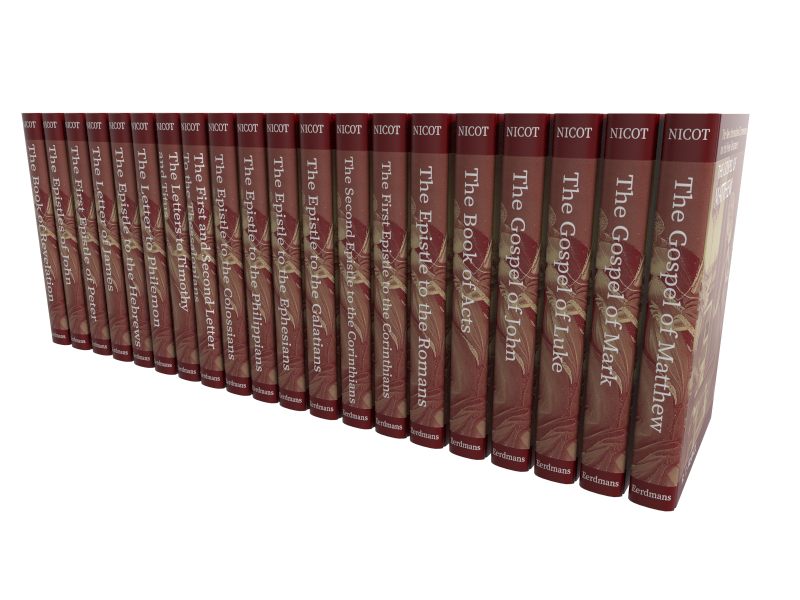
New International Commentary On The New Testament

New International Commentary On The New Testament

The New International Commentary on the New Testament (NICNT), published by Eerdmans, is one of the most respected and enduring evangelical commentary series of the modern era. Aimed primarily at pastors, teachers, and students of Scripture, it provides a thorough and faithful exposition of each New Testament book while remaining accessible to the thoughtful lay reader. With over twenty volumes to date, it covers the full New Testament canon with scholarly depth and pastoral sensitivity.

Each volume in the NICNT reflects a careful balance between critical engagement and reverent commitment to the authority of Scripture. The contributors, drawn from the best of evangelical scholarship, combine expertise in the original languages with a concern for the theological and practical message of the text.

Renowned for its clarity, depth, and devotional warmth, the NICNT stands as a bridge between academic rigour and spiritual insight. Among contemporary series, it remains a trusted companion for those seeking to preach, teach, and live out the Word of God with understanding and conviction.

Reset

The Epistles Of James And John

Mid-levelGeneral readers, Pastors-in-trainingUseful supplement
8.1

Summary

We find The Letters To James and John by Alexander Ross to be a sober and pastorally alert exposition of these practical and searching New Testament writings. Ross approaches both James and the Johannine letters with a clear commitment to their theological seriousness and ethical force, reading them as urgent calls to lived faith, truth, and love within the people of God.

We note the steady and reverent tone that marks the whole volume. James is treated as a coherent summons to wholehearted obedience, while the letters of John are read as tests of genuine fellowship expressed through right belief, love, and holiness. Ross keeps close to the text and allows its moral and theological weight to speak without dilution.

Why Should I Own This Commentary?

We should own this commentary because it represents a dependable evangelical reading shaped by clarity and restraint. Ross explains the argument and flow of each letter carefully, without unnecessary speculation or rhetorical excess. The result is an exposition that is trustworthy and pastorally grounded.

We also value the devotional seriousness of the work. Ross writes with the church in view, seeking to strengthen assurance, warn against empty profession, and encourage faithful perseverance. His handling of difficult passages is calm and measured.

At the same time, we recognise that this is an older work. Engagement with later literary and theological developments is limited, and the commentary is best used alongside more recent studies.

Closing Recommendation

We recommend this volume as a faithful and pastorally useful older commentary on James and the letters of John. It remains a sound supplementary resource for careful reading and teaching.

🛒 Purchase here

The Second Epistle to the Corinthians

Mid-levelBusy pastors, General readers, Pastors-in-trainingStrong recommendation
8.7

Summary

We find The Second Letter To Corinthians by Philip Edgcumbe Hughes to be a serious and spiritually alert exposition of one of Paul’s most personal and demanding letters. Hughes approaches 2 Corinthians with close attention to the flow of argument and the emotional texture of the text, reading it as sustained apostolic defence bound up with pastoral vulnerability and gospel ministry.

We appreciate the way Hughes traces the letter’s themes of weakness, suffering, reconciliation, and apostolic authority. He treats Paul’s defence of his ministry not as self interest, but as a necessary protection of the gospel itself. Throughout, the exposition keeps the cross shaped nature of Christian service firmly in view.

Why Should I Own This Commentary?

We should own this commentary because it combines exegetical care with theological seriousness. Hughes works carefully with the Greek text and historical setting, yet he never loses sight of the pastoral stakes involved. Difficult passages are handled with restraint and conviction.

We also value the clarity of Hughes’s theological instincts. He consistently shows how Paul’s understanding of ministry flows from Christ’s saving work and from the pattern of death and resurrection. This makes the commentary especially helpful for those teaching on suffering, perseverance, and gospel integrity.

The volume reflects the strengths of its generation. It is less expansive in engaging later scholarly debates, but it remains focused, reverent, and dependable.

Closing Recommendation

We commend this commentary as a theologically rich and pastorally serious exposition of 2 Corinthians. It remains a valuable resource for careful study and faithful proclamation.

🛒 Purchase here

The Epistle to the Romans

AdvancedAdvanced students / scholars, Busy pastors, Pastors-in-trainingTop choice
9.2
Author: John Murray
Bible Book: Romans
Publisher: Eerdmans
Theological Perspective: Reformed
Resource Type: Commentary

Summary

We regard The Letter To Romans by John Murray as one of the most theologically weighty and spiritually serious commentaries ever written on Paul’s epistle. Murray approaches Romans with a profound reverence for the text, reading it as a unified and carefully argued exposition of the gospel of God. His work reflects deep immersion in Scripture and a disciplined Reformed theological framework.

We find that Murray moves deliberately through Romans, pressing hard on the meaning of Paul’s language and logic. Doctrines of sin, justification, union with Christ, sanctification, and God’s sovereign purpose are treated with exceptional care. The commentary is never rushed, and Murray refuses to simplify truths that Paul himself presents with depth and gravity.

Why Should I Own This Commentary?

We should own this commentary because it models what it means to read Romans with theological seriousness. Murray does not treat the letter as a quarry for proof texts, but as a sustained apostolic argument that demands close and patient attention. His handling of justification by faith and union with Christ remains especially influential.

We also value the devotional weight of the work. Although rigorous and demanding, the commentary consistently drives the reader toward worship, humility, and obedience. Murray writes as a theologian in the service of the church, not as a detached academic.

This is not an easy commentary, and it is not designed for quick reference. It rewards slow reading and careful reflection, and it shapes the way Romans is understood at a foundational level.

Closing Recommendation

We strongly commend this volume as a classic Reformed exposition of Romans. It remains essential reading for serious students of Scripture and deserves a central place in any theological library.

🛒 Purchase here

The Gospel Of Luke

Mid-levelBusy pastors, General readers, Pastors-in-trainingStrong recommendation
8.5

Summary

We find The Gospel Of Luke by J. Norval Geldenhuys to be a reverent and pastorally shaped exposition of Luke’s account of the life and ministry of Jesus. Written from a conservative evangelical stance, the commentary reflects a deep confidence in the historical reliability of the Gospel and a sustained concern to trace Luke’s theological purpose.

We note that Geldenhuys reads Luke as a carefully ordered narrative aimed at giving assurance to believers. Attention is given to Luke’s emphasis on salvation history, the work of the Holy Spirit, prayer, and God’s concern for the marginalised. The exposition proceeds steadily, combining explanation of the text with theological reflection shaped by the needs of the church.

Why Should I Own This Commentary?

We should own this commentary because it models an older but still valuable form of evangelical exposition. Geldenhuys handles the text with seriousness and devotion, resisting speculative critical theories while remaining attentive to literary flow and historical background.

We also value its pastoral tone. This is a commentary written to strengthen faith and understanding, not merely to analyse sources. Geldenhuys consistently keeps the person and work of Christ central, and his treatment of key passages reflects a concern for clarity and reverence.

That said, we recognise that the work reflects its era. Engagement with later scholarly discussions is limited, and some sections move more descriptively than analytically. It is best used as a companion rather than a comprehensive critical resource.

Closing Recommendation

We recommend this volume as a faithful and pastorally minded exposition of Luke. It remains a helpful resource for readers who value theological steadiness and devotional clarity alongside careful explanation.

🛒 Purchase here

The Epistle of James

Mid-levelGeneral readers, Pastors-in-trainingUseful supplement
7.9

Summary

We find The Letter To James by James B. Adamson to be a careful and sober treatment of a letter that presses Christian faith into practical obedience. Adamson approaches James with close attention to language, structure, and Jewish background, seeking to read the epistle as coherent pastoral instruction rather than a loose collection of moral sayings.

We note that the commentary reflects an earlier stage of evangelical scholarship. Adamson is attentive to textual detail and historical setting, but his exposition moves deliberately and without rhetorical flourish. Themes of endurance, integrity of speech, social responsibility, and lived righteousness are handled with seriousness and restraint.

Why Should I Own This Commentary?

We should own this commentary because it represents a dependable evangelical approach to James that resists both moralism and over systematisation. Adamson allows the ethical force of the letter to stand, while carefully explaining how James addresses real pressures within the believing community.

We also value its clarity and discipline. Adamson does not overwhelm the reader with speculative reconstruction, nor does he force the text into later theological debates. This makes the commentary useful for readers who want a steady guide through the letter rather than a programmatic argument.

At the same time, we recognise its limitations. Later scholarship has explored James with greater literary and theological breadth. This volume is best read as a solid foundation rather than a final word.

Closing Recommendation

We recommend this commentary as a reliable and historically important evangelical exposition of James. It serves well as a supplementary resource alongside more recent works.

🛒 Purchase here

The Epistle to the Hebrews

Mid-levelBusy pastors, General readers, Pastors-in-trainingStrong recommendation
8.8
Author: F. F. Bruce
Bible Book: Hebrews
Publisher: Eerdmans
Theological Perspective: Broadly Evangelical
Resource Type: Commentary

Summary

We regard The Letter To Hebrews by F. F. Bruce as one of the classic evangelical treatments of this demanding book. Bruce approaches Hebrews with historical sensitivity, careful argument tracing, and a deep respect for the letter’s pastoral purpose. He reads Hebrews as sustained exhortation, addressed to believers under pressure, calling them to persevere by fixing their confidence on the finished and sufficient work of Christ.

We are struck by the balance Bruce maintains throughout. He handles complex Old Testament material with clarity, showing how covenant, sacrifice, and priesthood are fulfilled in Christ, without losing sight of the letter’s urgent calls to faith, obedience, and endurance. The exposition is marked by restraint, clarity, and steady theological judgement.

Why Should I Own This Commentary?

We should own this commentary because it exemplifies careful evangelical scholarship that serves both understanding and proclamation. Bruce works closely with the text and its historical setting, but never allows technical discussion to overshadow the flow of the argument or the pastoral weight of the letter.

We also value Bruce’s theological balance. He treats the warning passages with seriousness, without speculation or alarmism, and consistently anchors them in the letter’s Christ centred vision. This makes the commentary especially helpful for pastors seeking to preach Hebrews with both conviction and care.

Although written in an earlier generation, the commentary has aged remarkably well. Its clarity and restraint continue to make it a reliable guide.

Closing Recommendation

We warmly recommend this volume as a trusted and enduring exposition of Hebrews. It remains a wise companion for teaching, preaching, and serious study.

🛒 Purchase here

The Letter of James

AdvancedAdvanced students / scholars, Pastors-in-trainingUseful supplement
7.9
Bible Book: James
Publisher: Eerdmans
Theological Perspective: Broadly Evangelical
Resource Type: Commentary

Summary

We find The Letter To James by Scot McKnight to be a detailed and thoughtfully argued study of a letter that presses faith into visible obedience. McKnight treats James as a coherent pastoral exhortation shaped by Jewish wisdom traditions and early Christian teaching, rather than as a loose collection of moral sayings. His exposition attends closely to language, structure, and social setting.

We appreciate the way McKnight situates James within the life of the early church. Themes of perseverance, speech, wealth, justice, and lived faith are handled with seriousness, and the ethical force of the letter is allowed to stand without dilution. The commentary consistently resists reading James through later theological controversies, seeking instead to hear the letter on its own terms.

Why Should I Own This Commentary?

We should own this commentary because it brings sustained clarity to a text that is often either flattened into moralism or forced into theological tension. McKnight works carefully with the Greek text and the letter’s rhetorical shape, helping readers see how James addresses concrete pressures faced by believing communities.

We also value McKnight’s transparency. Interpretive decisions are explained clearly, and alternative readings are presented fairly. This makes the commentary particularly useful for advanced study and teaching contexts where careful reasoning matters.

At the same time, we need to read this volume with discernment. Some emphases lean more heavily on social and ethical analysis than on explicit Christological synthesis. These features do not negate the work’s value, but they do shape how it is best used.

Closing Recommendation

We recommend this commentary as a serious and demanding engagement with James. It is best read alongside more confessionally driven works, but it offers real insight for readers willing to engage it carefully.

🛒 Purchase here

The Epistle to the Hebrews

AdvancedAdvanced students / scholars, Pastors-in-trainingTop choice
9.2

Summary

We find The Letter To Hebrews by Gareth Lee Cockerill to be one of the most theologically rich and pastorally serious treatments of this demanding New Testament book. Cockerill approaches Hebrews as sustained exhortation grounded in Christ’s high priestly work, written to strengthen weary believers tempted to drift or turn back. His exposition keeps argument, warning, and promise closely bound together.

We appreciate the way Cockerill traces the book’s complex structure with patience and clarity. He shows how Hebrews moves deliberately from Christ’s supremacy to His priestly mediation, and then presses those truths home through repeated calls to endurance, faith, and obedience. The Old Testament is handled with care, not as proof text but as living Scripture fulfilled in Christ.

Why Should I Own This Commentary?

We should own this commentary because it takes Hebrews seriously on its own terms. Cockerill works closely with the Greek text, but always with an eye to how the letter functions pastorally. Difficult warning passages are treated with theological depth and restraint, avoiding both softening and severity.

We also value the strong Christological focus. Christ’s person and priestly work dominate the exposition, shaping how sacrifice, covenant, perseverance, and hope are understood. This makes the commentary especially valuable for preaching Hebrews as gospel proclamation rather than abstract theology.

The work is demanding, but it is consistently purposeful. Those willing to give time to careful reading will find it deeply rewarding.

Closing Recommendation

We commend this volume as a major contribution to the study of Hebrews. It combines exegetical rigour with pastoral seriousness and stands as a leading resource for those entrusted with teaching this letter.

🛒 Purchase here

The First and Second Letters to the Thessalonians

Mid-levelBusy pastors, General readers, Pastors-in-trainingStrong recommendation
8.8

Summary

We find The Letter To 1 and 2 Thessalonians by Gordon Fee to be a careful and pastorally sensitive exposition of Paul’s earliest correspondence. Fee reads these letters as deeply relational texts, written to encourage young believers facing pressure, confusion, and grief, rather than as abstract treatments of eschatology. His handling keeps the pastoral tone of the letters firmly in view.

We appreciate the way Fee integrates historical setting, linguistic detail, and theological purpose. Questions surrounding persecution, holiness, work, and the return of Christ are treated with sobriety and restraint. The commentary resists sensational readings of eschatological passages and instead emphasises how hope in Christ shapes faithful living in the present.

Why Should I Own This Commentary?

We should own this commentary because it models how careful exegesis serves the life of the church. Fee’s close engagement with the Greek text consistently clarifies Paul’s argument, while his conclusions remain tethered to the pastoral aims of encouragement, correction, and reassurance.

We also value Fee’s balanced handling of the return of Christ. He avoids speculative timelines and keeps the focus on readiness, perseverance, and holiness. This makes the volume particularly helpful for pastors who want to teach these letters without fuelling unnecessary anxiety or controversy.

Finally, we find the commentary marked by warmth and realism. Fee understands these letters as ministry shaped by affection, concern, and shared suffering, and that pastoral instinct carries through the exposition.

Closing Recommendation

We commend this volume as a reliable and pastorally wise guide to 1 and 2 Thessalonians. It serves preaching and teaching well and continues to reward careful, reflective use.

🛒 Purchase here

The Epistles to the Colossians, to Philemon and to the Ephesians

Mid-levelBusy pastors, General readers, Pastors-in-trainingStrong recommendation
8.7

Summary

We find The Letters To Colossians, Philemon, Ephesians by F. F. Bruce to be a model of careful scholarship joined to pastoral restraint. Bruce brings his well known historical sensitivity and textual clarity to these closely related letters, helping us read them both individually and together. His exposition keeps a steady eye on argument flow, historical context, and theological coherence, without pressing the text into rigid systems.

We are struck by the calm authority of Bruce’s writing. He neither rushes difficult passages nor burdens the reader with unnecessary detail. Instead, he patiently explains how each letter addresses concrete church situations while contributing to a larger vision of Christ’s supremacy, the unity of God’s people, and the outworking of the gospel in everyday life.

Why Should I Own This Commentary?

We should own this commentary because it exemplifies disciplined evangelical scholarship at its best. Bruce handles linguistic detail and historical background with confidence, but he never allows technical discussion to eclipse the text itself. This makes the volume especially reliable for pastors who want clarity without distraction.

We also value Bruce’s theological balance. He is neither speculative nor combative. Where interpretive options exist, he presents them fairly and explains his reasoning with care. This fosters trust and invites thoughtful engagement rather than passive dependence.

Finally, we find this commentary pastorally usable. While not overtly homiletical, it consistently helps readers grasp how doctrine shapes church life, relationships, and conduct. The tone encourages steady teaching rather than dramatic flourish.

Closing Recommendation

We warmly commend this volume as a wise, restrained, and enduring guide to Colossians, Philemon, and Ephesians. It may not shout for attention, but it rewards repeated consultation and remains a trustworthy companion for serious study.

🛒 Purchase here