
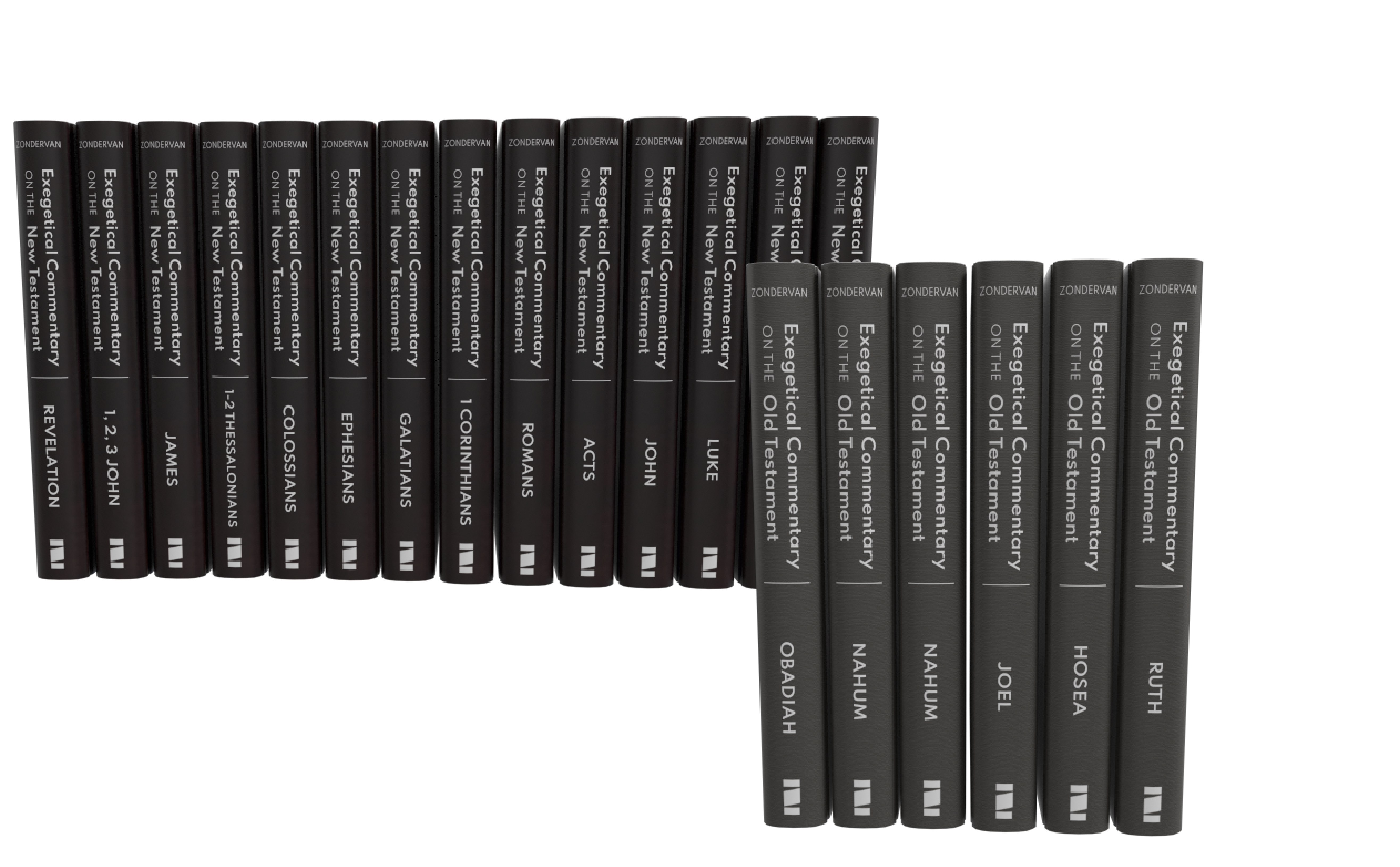
Exegetical Commentary On The Old Testament

Exegetical Commentary On The Old Testament

The Exegetical Commentary on the Old Testament series, published by Zondervan, is designed to serve pastors, teachers, and scholars who seek to bridge the gap between careful exegesis and faithful proclamation. Written by leading evangelical scholars, each volume provides a clear analysis of the Hebrew text and demonstrates how the message of the Old Testament unfolds in its original context and continues to speak to the church today.

Distinctive for its detailed discourse analysis, the series emphasises the literary and theological structure of each book, helping readers grasp both the meaning of individual passages and the unity of the whole. Charts, diagrams, and outlines assist in tracing the author’s argument, while each section concludes with practical applications that connect exegesis to exposition. The commentaries combine scholarly depth with pastoral warmth, encouraging readers to approach the Old Testament with both reverence and clarity.

Comparable in quality to Zondervan’s New Testament counterpart, this series is ideally suited to pastors, students, and serious Bible readers who wish to engage deeply with the Hebrew Scriptures while maintaining confidence in their inspiration and authority.

Publisher: Zondervann

Series Editor: Jim Smith

Reset

Joel

AdvancedAdvanced students / scholars, Busy pastors, Pastors-in-trainingStrong recommendation
8.3
Author: Joel Barker
Bible Book: Joel
Publisher: Zondervan
Theological Perspective: Broadly Evangelical
Resource Type: Commentary

Summary

We approach Joel by Joel Barker with reverent attention to the prophetic voice preserved in this short but theologically deep book. Barker invites the reader into a close reading of the Hebrew text, tracing how Joel’s rhetoric shapes its message of covenant judgement and covenant renewal. His analysis is rooted in discourse patterns and the flow of argument, helping us see how repetition, urgency, and the book’s compact structure carry its theological thrust. This is not casual commentary, but careful study that honours the text and its setting in the life of Israel.

Barker’s exposition remains anchored in the text’s ancient context while opening pathways to proclamation today. He attends to the book’s motifs of the day of the Lord, repentance, and restoration, showing how they fit together within Joel’s compressed but powerful narrative logic.

Why Should I Own This Commentary?

We recommend this volume because it brings clarity to a book that can feel elusive in its brevity and intensity. Barker’s discourse focus equips pastors to see how Joel’s words cohere and why they grip the reader’s attention. His work moves from the word on the page to faithful proclamation with pastoral sensitivity and scholarly care.

This commentary balances structural sensitivity with theological reflection. It helps the preacher follow the book’s contours and trace its motifs, so that teaching is shaped by the text’s own emphases and nuance. Readers will appreciate how Barker keeps the prophet’s urgent call to covenant faithfulness in view for the church’s life today.

Closing Recommendation

We recommend Joel for pastors and Bible teachers who want a solid exegetical guide that clarifies how the book’s structure carries its message. This volume rewards careful engagement and provides a firm foundation for proclamation that honours the text’s depth and urgency.

🛒 Purchase here

Hosea

AdvancedAdvanced students / scholars, Busy pastors, Pastors-in-trainingStrong recommendation
8.3
Author: Jerry Hwang
Bible Book: Hosea
Publisher: Zondervan
Theological Perspective: Broadly Evangelical
Resource Type: Commentary

Summary

We approach Hosea by Jerry Hwang with deep respect for the prophet’s fierce poetry and tender theology. This commentary engages the Hebrew text with careful discourse analysis, tracking how Hosea’s words move from betrayal and judgement toward restoration and hope. Hwang places weight on the patterns of language and structure that shape the book’s message, helping the reader see how the prophet’s rhetorical choices underline God’s relentless love for an unfaithful people.

The commentary assumes some familiarity with Hebrew, yet Hwang’s exposition remains attentive and accessible without sacrificing rigour. We find consistent focus on the flow of argument and the interplay between historical setting and theological claim, so that the preacher or teacher can grasp both the forest and the trees.

Why Should I Own This Commentary?

We recommend this volume because it unites solid exegesis with pastoral sensitivity. Hosea’s raw imagery and unsettling metaphors can intimidate, but Hwang’s structural reading shows how the book’s parts fit into its whole and how the prophet’s call to covenant faithfulness resonates for the church today. His work is rooted in the text’s rhetorical moves, and he communicates with clarity that honours the prophetic voice.

Hwang’s contribution enriches our understanding of God’s character as revealed in Hosea’s confrontations with sin and his celebration of reconciliation. Pastors preparing sermons or teachers leading study will appreciate the balance of technical insight and practical traction. This is a commentary that strengthens proclamation without sacrificing the text’s complexity.

Closing Recommendation

We recommend this commentary to pastors and teachers who hunger for exegetical depth and theological clarity. Its discourse focus equips the reader to preach or teach Hosea with confidence, drawing out the prophet’s call to repentance and the Lord’s promise of restoration in ways that resonate with the life of faith.

🛒 Purchase here

Daniel

AdvancedAdvanced students / scholars, Busy pastors, Pastors-in-trainingStrong recommendation
8.3
Author: Wendy Widder
Bible Book: Daniel
Publisher: Zondervan
Theological Perspective: Broadly Evangelical
Resource Type: Commentary

Summary

We approach Daniel by Wendy Widder with a readiness to be challenged and instructed, because this is a commentary that does not shy away from the text’s difficult questions, yet serves pastors and teachers with earnest care. Widder engages the Hebrew text through detailed discourse analysis, tracking the flow of argument and the literary logic that carries the book from imperial courts to visions of world history and divine judgement, and then to visions of hope. She attends to the place of Daniel in the Old Testament canon, and helps readers see how the text’s own structure shapes its message and application.

The commentary assumes some familiarity with Hebrew, yet the author’s exposition never becomes opaque. We find steady attention to the primary sense of the passages, inviting us to let the biblical author’s intent shape our proclamation and teaching.

Why Should I Own This Commentary?

We recommend this volume because it combines serious exegetical engagement with shepherding concern. Widder’s work consistently moves from careful observation of the Hebrew text toward theological reflection on what it means to live in the light of God’s sovereignty, justice, and mercy. For pastors preparing expositional sermons, her discourse-level analysis offers a framework that honours the text’s complexity and resists reduction to simplistic moral points.

Her structure and attention to literary form help the preacher trace themes of faithfulness under foreign rule, the Lord’s control over history, and the call to trust God in contexts of pressure and uncertainty. This is a stamina building commentary that rewards sustained engagement with the book itself.

Closing Recommendation

We recommend Daniel for pastors and teachers who want an exegetical commentary that respects both the Hebrew text and the theological depth of the book. It is demanding but enriching, helping the reader to preach and teach with confidence and care.

🛒 Purchase here

Ruth

AdvancedAdvanced students / scholars, Busy pastorsTop choice
9.2
Bible Book: Ruth
Publisher: Zondervan
Theological Perspective: Reformed
Resource Type: Commentary

Summary

Daniel I. Block’s Ruth in the Zondervan Exegetical Commentary on the Old Testament series provides a rich, text-driven, and theologically sensitive exposition of this beloved book. As one of the finest evangelical Old Testament scholars of our day, Block brings together linguistic expertise, literary insight, and pastoral warmth. His treatment honours the narrative’s beauty, its historical context, and its theological message while remaining highly usable for preachers and teachers.

The commentary walks through each unit of the text with clarity, highlighting structure, grammar, key terms, and narrative movement. Block’s goal is to help the reader understand not only what the text says, but how it says it—revealing the artistry and theological depth embedded in the story of Naomi, Ruth, and Boaz.

Why Should I Own This Commentary?

We value how Block combines technical skill with genuine pastoral sensitivity. His attention to Hebrew narrative, wordplay, and character development gives preachers a deeper appreciation of the text’s craftsmanship. At the same time, his exposition remains warm, clear, and spiritually compelling. He highlights the book’s themes of covenant faithfulness, loyal love, providence, and the surprising grace of God displayed in ordinary lives.

Block is especially strong in showing how the book of Ruth points forward to the redemptive purposes of God—culminating in David’s line and ultimately in Christ. Without forcing connections, he draws out the theological implications with balance and insight. His reflections on the cultural and legal background (kinsman-redeemer, gleaning laws, family loyalty) equip preachers to explain Ruth with clarity and confidence.

The commentary’s layout—combining structural analysis, exegetical detail, and pastoral reflection—makes it particularly useful for sermon preparation. It provides both the depth needed for careful study and the clarity needed for faithful communication. Block’s sensitivity to the emotional tone of the narrative, especially Naomi’s journey from emptiness to restoration, makes his work pastorally powerful.

Closing Recommendation

We warmly commend Block’s *Ruth* to pastors, teachers, and serious students of Scripture. It stands among the very best resources available on this book—deeply faithful, beautifully written, and rich in theological insight.

If you want a commentary that combines technical strength with pastoral usefulness and literary sensitivity, Block’s work is an exceptional choice.


🛒 Purchase here

Judges

AdvancedAdvanced students / scholars, Busy pastorsStrong recommendation
8.1

Summary

We review Judges by Mark J. Boda and Mary L. Conway, published by Zondervan in the Exegetical Commentary on the Old Testament series. This substantial volume—well over 900 pages—offers a disciplined, text-driven approach designed for pastors, teachers and serious students who want to understand the structure, flow and theology of Judges. It is a commentary written with academic precision but shaped with ministry use in mind.

The authors combine original-language engagement, discourse analysis and theological reflection in a format that walks through the book of Judges unit by unit. Each section provides translation, movement through the Hebrew text, an explanation of structure, and reflections on canonical significance. This makes it an excellent resource for those who want more than surface-level exposition while still needing clarity for sermon preparation.

Why Should I Own This Commentary?

First, this commentary excels in helping the reader understand the internal logic and literary design of Judges. The book is not simply a sequence of isolated stories; it is a spiralling narrative of Israel’s increasing moral collapse and God’s persistent, gracious intervention. Boda and Conway make this structure clear, showing how each judge contributes to the overall theological burden of the book. For Reformed preachers, this helps illuminate themes of covenant faithfulness, human depravity and the need for a righteous king.

Second, its handling of the Hebrew text is robust without becoming inaccessible. The authors consistently explain textual decisions, structural markers and linguistic features in a way that benefits pastors who may not be fluent in Hebrew but desire depth. Their work fosters confidence: when preparing a sermon, you have a trusted companion who helps you understand not only what the text says but why it is written the way it is.

Third, this commentary is particularly strong in its theological reflections. The cyclical pattern of sin, judgment and deliverance in Judges is traced with care, helping preachers draw out redemptive-historical trajectories without forcing connections. While the Christological implications are not always explicitly developed, they are present—especially in the movement from flawed human deliverers to the need for a true and righteous Deliverer.

Closing Recommendation

We warmly recommend this commentary for pastors, elders, teachers and students committed to preaching or teaching Judges with clarity and conviction. Its depth, structural analysis and theological integrity make it one of the stronger modern resources for handling this challenging book.

If you are looking for a lighter, devotional-style commentary, this volume may feel demanding. But for those who want to honour the Hebrew text and shepherd their congregation through the message of Judges with seriousness and insight, this commentary is a worthy investment.


🛒 Purchase here

Leviticus

AdvancedAdvanced students / scholars, Busy pastors, Pastors-in-trainingTop choice
9.2
Author: Jay Sklar
Bible Book: Leviticus
Publisher: Zondervan
Theological Perspective: Broadly Evangelical Reformed
Resource Type: Commentary

Summary

The commentary in question is Leviticus by Jay Sklar, part of the Zondervan Exegetical Commentary on the Old Testament (ZECOT) series, published by Zondervan in 2023. This volume spans approximately 864 pages.
In terms of approach, Sklar provides for each pericope a Hebrew-English translation, a detailed exegetical outline of the passage, commentary that engages the Hebrew text (though not requiring full proficiency), and a “Canonical and Theological Significance” section that bridges the ancient text with contemporary pastoral concerns. The structure places discourse analysis, textual structure and literary context at the forefront, reflecting the series’s emphasis on how an author says something as well as what is said.

It is aimed primarily at pastors, Bible-teachers, ministry leaders and serious students of Scripture who are willing to engage with the Hebrew text and desire a trustworthy resource for preaching and teaching. While technical in places, it strives for accessibility. :

Why Should I Own This Commentary?

First, its strengths lie in its combination of rigorous exegesis and a pastor-friendly framework. Sklar does not shy away from Hebrew, syntax and discourse analysis, yet the commentary remains readable and oriented toward preaching and teaching. Reviewers note that whereas many commentaries on Leviticus become heavy in technical minutiae, this commentary retains the “why it matters” dimension for church ministry. For you as a pastor and Bible-teacher, this means a deeper grasp of the text’s structure, especially around key Levitical concepts like holiness, atonement, presence and purity—and the capacity to craft sermons that honour the text without being dry or inaccessible.

Secondly, the volume’s theological content is commendable from a Reformed vantage. Sklar consistently points to the presence of a holy God dwelling among a redeemed people, the necessity of substitutionary atonement (implicit in Leviticus’s sacrifices) and the forward-looking purpose of the law in covenant-community formation. While he does not always explicitly carry out a full covenantally, Reformed theology, the framework supports it well. This makes the commentary valuable for sermon preparation: the “Canonical and Theological Significance” sections often give you ready-to-go homiletic headings and theological insights rooted in the original context.

Thirdly, in practical usefulness this volume excels. Given how many find the Book of Leviticus difficult to preach, this commentary gives you clarity on structure and purpose, why the rituals matter, what they teach this covenant, people about God and neighbour, and then invites modern application. Reviewers emphasise that the layout (translations + outline + commentary + application) supports sermon-craft. For the busy pastor you get both depth and usable scaffolding.

Of course no commentary is perfect: some readers with little Hebrew may find parts dense, and there are times when the theological motifs (e.g., sin-wrath-atonement) could be more coherently developed. A reviewer noted that the motif of law functioning to ‘protect the people from divine wrath’ was touched on but not fully integrated. So while this is an excellent resource, it still requires you to engage with the text and draw out the connections pastorally.

Closing Recommendation

In our judgment, this commentary is strongly recommended for pastors, teachers and serious students who plan to preach or teach through the Book of Leviticus. If your aim is to do more than survey the book and instead to guide your congregation through it faithfully, honouring the Hebrew text, engaging its theological weight and crafting relevant application—then this belongs on your shelf.

For those who only need a very brief introduction, or have limited Hebrew interest, a more summary commentary might suffice (and this work may feel detailed). But if you value a high-quality Reformed-friendly resource that marries sound exegesis with homiletic insight, then we regard this as one of the better recent options for Leviticus.


🛒 Purchase here