
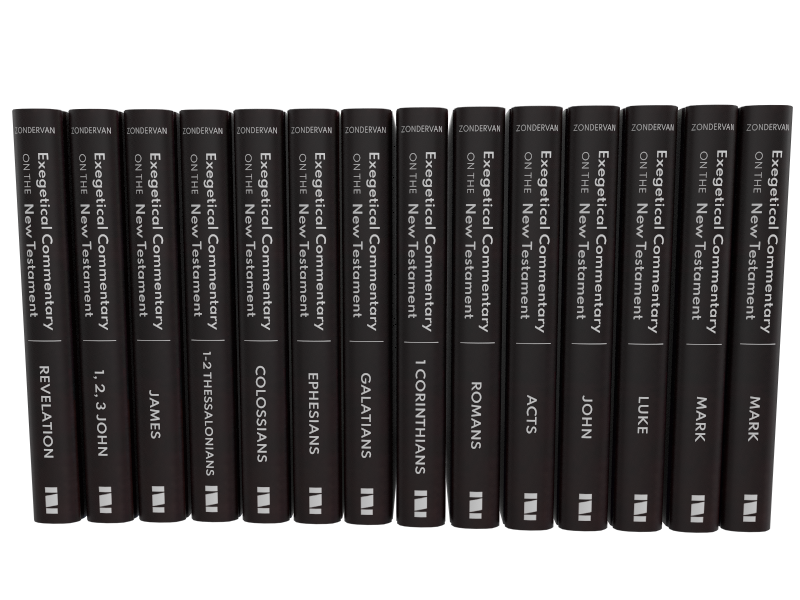
Exegetical Commentary On The New Testament

Exegetical Commentary On The New Testament

The Exegetical Commentary on the New Testament (ECNT), published by Zondervan and shaped under the editorial leadership of Clinton E. Arnold, was created to give pastors and serious Bible teachers a reliable bridge between the Greek text and the weekly demands of sermon preparation. Its stated aim is to offer robust exegesis without sliding into academic excess, allowing preachers to work closely with the biblical text while maintaining clarity and pastoral usefulness. The series intentionally targets those who want more than a devotional overview but who do not require the exhaustive technical detail of advanced scholarly sets.

Arnold’s editorial vision serves the church well. He has gathered authors who are not only competent in the original languages but also sensitive to the needs of those who preach and teach. The tone is broadly evangelical, with contributors operating within the wide conservative spectrum, though individual emphases naturally vary. The format—fresh translation, structural outline, detailed exegesis, and theological reflection—is consistent from volume to volume, giving the reader a reliable framework for approaching each book.

The series is especially valuable for pastors who want to work with the text responsibly but cannot afford to spend hours on technical minutiae. It offers a steady hand, clear prose, and a warm commitment to the authority of Scripture. While not every volume reaches the same heights, the overall contribution is substantial and pastorally significant. ECNT reflects the kind of accessible scholarship that strengthens expository preaching and supports those entrusted with regular ministry of the Word.

Its greatest strength lies in how it fills a gap in the commentary landscape. ECNT is more exegetically grounded than many mid-level sets, yet far more readable and coherent than many advanced commentaries. It offers substance without unnecessary density. For the working preacher, it functions as a trustworthy companion—close to the text, alert to the theological contours of each passage, and shaped by a desire to serve the church. In the hands of a pastor, it provides steady help week by week.

Publisher: Zondervan

Series Editor: Clinton E. Arnold

Reset

Acts

AdvancedAdvanced students / scholars, Busy pastors, Pastors-in-trainingStrong recommendation
8.3
Bible Book: Acts
Publisher: Zondervan
Theological Perspective: Broadly Evangelical
Resource Type: Commentary

Summary

We find Schnabel’s Acts to be a major, technically serious commentary that keeps pressing us back into Luke’s wording, argument, and narrative movement. It is built for sustained exegesis, with the kind of detail that helps us handle speeches, travel narratives, and repeated themes without flattening the book into a string of anecdotes.

We are particularly helped by the steady focus on literary flow and historical grounding. Acts is full of pivotal turns, public testimony, and contested claims. Schnabel equips us to read those moments in their immediate context, to watch the gospel advance through conflict, and to track how Luke presents the risen Christ building His church by His Spirit and Word.

Why Should I Own This Commentary?

We should own this commentary if we want a reliable technical anchor for preaching and teaching Acts with confidence. The book is long, varied, and sometimes deceptively familiar. We can preach the big moments and still miss Luke’s purpose. Schnabel’s careful work helps us hold together detail and direction, so that sermons arise from the passage’s main thrust rather than from favourite themes we bring to it.

We also value the theological safety of this volume. We are not being pushed toward suspicious reconstructions or thin scepticism, but toward a close reading of Scripture as the church’s living word. That makes it a stable companion for pastors who need to do serious study while keeping an eye on what the congregation will actually hear and need.

We should be honest about the cost. This is not a quick, breezy commentary. It asks time, attention, and patient translation into plain speech. Yet if we use it earlier in the week, it can sharpen our grasp of the text, deepen our confidence in Luke’s message, and strengthen our proclamation of Christ’s kingdom advance through ordinary means, preaching, prayer, suffering, and mission.

Closing Recommendation

We strongly recommend Schnabel’s Acts for pastors, teachers, and advanced students who want a substantial evangelical commentary that rewards careful work and protects us from shallow handling of a complex book. If we are preaching Acts in a sustained series, this is the sort of volume that can sit open beside the text and steadily improve the quality of our exegesis and our preaching.

As a next step, see the Bible Book Overview for Acts, browse Top Recommendations, or use the Reformed Commentary Index for a fuller shelf.


🛒
Purchase here

John

AdvancedAdvanced students / scholars, Busy pastorsStrong recommendation
8.3
Bible Book: John
Publisher: Zondervan
Theological Perspective: Broadly Evangelical
Resource Type: Commentary

Summary

We find Klink’s John to be a substantial, carefully argued, and consistently text-driven technical commentary, written for readers who want to work closely with the Greek text without losing the Gospel’s theological and pastoral centre. The format aims to keep the passage’s flow in view, then press into detail where John’s language, structure, and emphases demand slow, disciplined reading.

Klink serves us well when John’s narrative slows into extended discourse, when themes spiral rather than march in straight lines, and when the Evangelist’s theological weight is carried through repeated words and tightly woven connections. We are helped to see how each scene sits in its immediate setting, how the argument develops across larger units, and how John’s presentation of Jesus presses the reader toward belief, confession, and life.

Why Should I Own This Commentary?

We should own this commentary if we want a serious companion for sustained work in John that does not treat the Gospel as a collection of favourite passages. Klink is attentive to structure and movement, which matters enormously in John. He helps us trace how signs and discourses belong together, how misunderstandings function in the narrative, and how John’s distinctive vocabulary builds theological pressure over time. That kind of help pays dividends in sermon preparation, especially when we are tempted to jump too quickly from a striking verse to an application.

We also value the way this volume supports responsible theological interpretation without slipping into speculative abstraction. John demands that we preach Christ as the eternal Son made flesh, the Lamb who takes away sin, the King lifted up in glory through the cross. Klink’s careful exegesis repeatedly steadies us here, forcing us to ask what the text actually says, how John says it, and why the Evangelist has arranged his material as he has. That discipline guards the pulpit from sentimental readings on the one hand, and from sterile technicalities on the other.

At the same time, we should be realistic about what a work of this size and density asks of us. This is not a quick Saturday-night aid. We will get the most benefit when we use it as a primary study tool in the earlier part of the week, then translate its insights into clearer, simpler proclamation. For many pastors, this will function best as the technical anchor on the desk, paired with one more directly expositional voice for homiletical shape and warmth.

Closing Recommendation

We strongly recommend Klink’s John for pastors and teachers who want a high quality, conservative, and gospel-safe technical commentary that rewards careful reading and strengthens confidence in the text. It is especially valuable when we are preaching the prologue, the long discourse sections, and the passion narrative, where precision and patience are both required. If we can give it time, it will repay us with clearer exegesis and steadier Christ-centred proclamation.

As a next step, see the Bible Book Overview for John, browse Top Recommendations, or use the Reformed Commentary Index for a fuller shelf.


🛒
Purchase here

Luke

AdvancedAdvanced students / scholars, Busy pastors, Pastors-in-trainingTop choice
8.9
Bible Book: Luke
Publisher: Zondervan
Theological Perspective: Broadly Evangelical
Resource Type: Commentary

Summary

We find Garland’s Luke to be a serious, sermon shaping companion for one of the richest books in the New Testament. He reads Luke as both careful historian and purposeful theologian, so we are helped to see not only what happens in each scene, but why it is told this way, in this order, with this emphasis.

We are given substantial help with the flow of the narrative, the function of speeches and set pieces, and the way Luke builds assurance through witness, fulfilment, and the steady advance of God’s saving plan. The tone is scholarly without being showy, and the work is consistently aimed at those who need to teach the text with accuracy, confidence, and pastoral feel.

Why Should I Own This Commentary?

We should own this because Luke can swallow a preacher whole. The material is vast, the themes are layered, and the narrative often advances by subtle echoes and long range connections. Garland helps us keep hold of the book’s movement, so we preach Luke as Luke, not as a collection of beloved stories. That alone makes this volume worth the shelf space.

We also benefit from Garland’s pastoral instincts. He does not treat exegesis as an end in itself. He presses toward meaning that lands in the life of the church, especially where Luke exposes our false securities, confronts self righteousness, and comforts the weary with the mercy of God in Christ. We are helped to apply without moralising, because the Gospel’s centre remains the saving work of Jesus and the call to follow Him.

We should be realistic about the commitment required. This is a large and detailed commentary, best used in planned preparation rather than last minute rescue. Yet when we are preaching a long series, or returning to key sections for Christmas, prayer, discipleship, wealth, and mission, this is exactly the kind of resource that repays repeated use.

Closing Recommendation

We can commend Garland’s Luke as a strong recommendation for pastors and Bible teachers who want depth, clarity, and steady guidance through a long Gospel. We will find it most useful when we want to trace Luke’s argument, keep the narrative moving, and preach Christ with the text’s own force and tenderness.

As a next step, see the Bible Book Overview for Luke at Bible Book Overview for Luke, browse Top Recommendations, or use the Reformed Commentary Index for a fuller shelf.


🛒
Purchase here

Mark

AdvancedAdvanced students / scholars, Busy pastors, Pastors-in-trainingTop choice
8.9
Bible Book: Mark
Publisher: Zondervan
Theological Perspective: Broadly Evangelical
Resource Type: Commentary

Summary

We find Strauss to be a wise guide through Mark, a Gospel that moves at pace yet carries immense theological weight. This volume is built for serious preparation, with close attention to the Greek text, careful handling of narrative flow, and a steady concern to show how each unit advances Mark’s purpose.

We are helped to see how Mark’s urgency works, how key themes are threaded through scenes and sections, and how the Gospel presses us toward the identity of Jesus, the cost of discipleship, and the surprising shape of the kingdom. The commentary is detailed, but it is not cluttered, Strauss keeps the main line visible and aims his work toward teaching and preaching rather than mere accumulation of notes.

Why Should I Own This Commentary?

We should own this because it strengthens our grip on Mark’s argument and structure, which is the difference between preaching episodes and preaching the Gospel. Strauss is particularly good at showing how the narrative turns, where emphasis falls, and how repeated ideas carry the reader forward. That makes it easier to preach Mark with clarity and momentum, without rushing past the text’s intended punch.

We also benefit from the way Strauss handles interpretive choices. We are not left with shallow certainty, nor are we buried under endless options. He weighs issues fairly, makes clear decisions, and keeps returning us to what the text is doing in context. That steadiness is a gift in Mark, where familiar stories can be domesticated, and where the demands of discipleship can be softened into inspirational sentiment.

We should also note the kind of labour this book rewards. It is not a quick skim commentary, and it is not mainly designed to hand us ready made sermon structures. It is a preparation tool, one that helps us do our work in the text so that our preaching has real backbone. Used well, it will sharpen exegesis, deepen theological confidence, and strengthen application that is driven by Mark’s own emphasis on Christ, the cross, and true following.

Closing Recommendation

We can commend this as a strong choice for pastors and Bible teachers who want careful exegesis without losing sight of proclamation. We will find it especially valuable when we need help tracing Mark’s flow, clarifying difficult details, and resisting common misreadings that flatten the Gospel’s urgency and edge. If we have time to study, this volume will repay it.

As a next step, see the Bible Book Overview for Mark at Bible Book Overview for Mark, browse Top Recommendations, or use the Reformed Commentary Index for a fuller shelf.


🛒
Purchase here

Matthew

AdvancedAdvanced students / scholars, Busy pastors, Pastors-in-trainingTop choice
8.6
Bible Book: Matthew
Publisher: Zondervan
Theological Perspective: Broadly Evangelical
Resource Type: Commentary

Summary

Grant Osborne’s Matthew volume in the Exegetical Commentary on the New Testament series offers a richly informed, pastorally sensitive, and academically responsible treatment of the first Gospel. Osborne combines careful exegesis, well-chosen background material, and clear theological insight, making the work accessible for pastors while grounded enough for serious students. His approach consistently seeks to unfold Matthew’s structure, highlight the evangelist’s theological priorities, and connect the text to the life of the church.

We appreciate that Osborne writes with warmth and clarity, never losing sight of the Gospel’s central focus on Jesus Christ as the promised Messiah and authoritative Lord. His engagement with Greek grammar, literary features, and first-century context strengthens the reader’s ability to understand Matthew as both history and proclamation. This makes the commentary a trustworthy companion for expositors who want depth without technical overload.

Why Should I Own This Commentary?

This commentary is particularly strong in its structural insights. Osborne excels at showing how Matthew arranges his material in purposeful, thematic ways. His frequent attention to discourse structure, narrative flow, and intertextual patterns helps preachers grasp not only what Matthew says but how and why he says it. This proves invaluable for sermon series planning and for avoiding a disjointed, verse-by-verse treatment of the Gospel.

We find his balance of exegetical rigor and pastoral application especially commendable. Osborne does not shy away from academic questions, but he communicates his conclusions with clarity and humility. His comments often move naturally from interpretive explanation to pastoral implication, making the commentary immediately useful for those preparing sermons, Bible studies, or discipleship material.

The volume also gives significant attention to the Christology of Matthew, emphasising Jesus as fulfilment of Old Testament promise, authoritative teacher, suffering servant, and risen King. Osborne’s theological reflections remain anchored in the text and avoid speculative tendencies, making this a dependable resource for doctrinally careful preaching.

Closing Recommendation

We warmly recommend Osborne’s Matthew commentary to pastors, students, and serious lay readers who want an exegetically robust and pastorally grounded treatment of the first Gospel. It provides clarity, depth, and steady guidance through both familiar passages and difficult texts.

While highly technical specialists may supplement it with more narrowly academic works, this volume offers a superb blend of scholarship and usefulness—an excellent addition to any expositor’s library.

As pastoral next steps, we can visit the Bible Book Overview, browse Top Recommendations, and use the Reformed Commentary Index to build a wiser working library.


🛒 Purchase here