
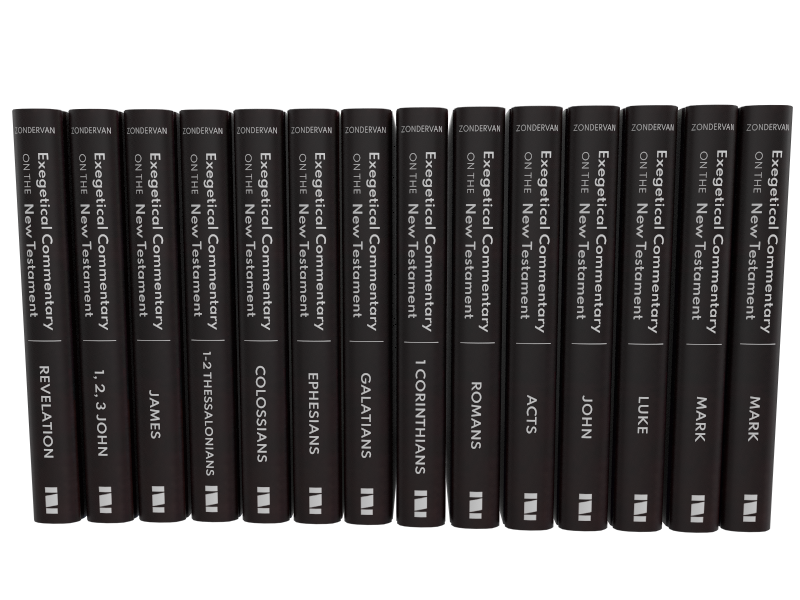
Exegetical Commentary On The New Testament

Exegetical Commentary On The New Testament

The Exegetical Commentary on the New Testament (ECNT), published by Zondervan and shaped under the editorial leadership of Clinton E. Arnold, was created to give pastors and serious Bible teachers a reliable bridge between the Greek text and the weekly demands of sermon preparation. Its stated aim is to offer robust exegesis without sliding into academic excess, allowing preachers to work closely with the biblical text while maintaining clarity and pastoral usefulness. The series intentionally targets those who want more than a devotional overview but who do not require the exhaustive technical detail of advanced scholarly sets.

Arnold’s editorial vision serves the church well. He has gathered authors who are not only competent in the original languages but also sensitive to the needs of those who preach and teach. The tone is broadly evangelical, with contributors operating within the wide conservative spectrum, though individual emphases naturally vary. The format—fresh translation, structural outline, detailed exegesis, and theological reflection—is consistent from volume to volume, giving the reader a reliable framework for approaching each book.

The series is especially valuable for pastors who want to work with the text responsibly but cannot afford to spend hours on technical minutiae. It offers a steady hand, clear prose, and a warm commitment to the authority of Scripture. While not every volume reaches the same heights, the overall contribution is substantial and pastorally significant. ECNT reflects the kind of accessible scholarship that strengthens expository preaching and supports those entrusted with regular ministry of the Word.

Its greatest strength lies in how it fills a gap in the commentary landscape. ECNT is more exegetically grounded than many mid-level sets, yet far more readable and coherent than many advanced commentaries. It offers substance without unnecessary density. For the working preacher, it functions as a trustworthy companion—close to the text, alert to the theological contours of each passage, and shaped by a desire to serve the church. In the hands of a pastor, it provides steady help week by week.

Publisher: Zondervan

Series Editor: Clinton E. Arnold

Reset

Proverbs

AdvancedAdvanced students / scholars, Busy pastors, Pastors-in-trainingStrong recommendation
8.5

Summary

We enter into Proverbs by Christopher B. Ansberry with expectant hearts and careful minds, because this is a commentary that refuses to skirt the challenges of wisdom literature while still serving the church. Ansberry guides us through the Hebrew text with discourse analysis at the centre, showing how the seemingly scattered proverbs fit into a bigger pedagogical pattern that shapes character and sharpens moral vision. He does not offer easy answers or quick formulas, but insists that the book’s arrangement and poetry matter for meaning and faithful application. The reading is demanding at times, yet richly rewarding, because it respects the text’s integrity and complexity.

Throughout the volume we see the author’s commitment to tracing the flow of thought, the recurring motifs of wisdom and fear of the Lord, and the way these contribute to life in covenant community and devotion to God. The commentary never divorces teaching from theological purpose, and every passage is offered to the reader with both clarity and seriousness.

Why Should I Own This Commentary?

We should own this commentary because it confronts Proverbs at the level where it actually works, drawing out how collections of sayings form a coherent moral and theological vision. Ansberry’s work is grounded in careful analysis of Hebrew structure, yet he keeps his gaze on what the book of Proverbs seeks to do: cultivate wisdom that honors the Lord and shapes life. Pastors and teachers will find that the text’s movement from fear of the Lord to wise living is never abstracted from the world of the church’s calling and obedience.

Where many commentaries rush to homiletical tags or oversimplified moral points, this volume resists that temptation and stays close to the rhetorical and theological heart of the book. We come away better equipped to preach, teach, and shepherd with both intellectual stewardship and pastoral care. It deepens our ability to handle Proverbs without flattening its theological and moral demands.

Closing Recommendation

We recommend Proverbs by Christopher B. Ansberry to pastors, teachers, and serious students seeking an exegetical commentary that honours the Hebrew text and the theological weight of wisdom literature. This is not a surface overview. It is an invitation to thoughtful engagement that strengthens exposition and nurtures maturity in ministry.

🛒 Purchase here

Ezra-Nehemiah

Advanced students / scholars, Busy pastors, Pastors-in-trainingStrong recommendation
8.2
Bible Book: Ezra Nehemiah
Publisher: Zondervan
Theological Perspective: Broadly Evangelical
Resource Type: Commentary

Summary

We find in Ezra-Nehemiah by Gary V. Smith a grounded and careful engagement with these two historical books, shaped by discourse analysis and attentive to the Hebrew text. Smith takes us through the narrative and theological contours of Israel’s return from exile, highlighting the flow of argument, structural moves, and the way Ezra and Nehemiah set their sights on covenant renewal, community formation, and faithfulness under pressure. His attention to context and structure helps readers trace the hand of God in both judgment and restoration, making sense of names, dates, and reforms without shrinking from the text’s complexity. He treats Ezra and Nehemiah not merely as history but as purposeful theological narrative that calls God’s people to faithful obedience.

The commentary assumes some knowledge of Hebrew but explains linguistic features clearly and consistently. Each section foregrounds the literary logic and canonical significance so that pastors can preach with confidence and teachers can lead study groups with clarity.

Why Should I Own This Commentary?

We recommend this volume for its disciplined approach to Hebrew discourse and narrative structure. Smith guides the reader through the alternations between confession, reform, opposition, and divine provision, and he does so without collapsing the distinct voices of Ezra and Nehemiah into one bland theological summary. We come away with a deeper grasp of how restored community is shaped amid tension, opposition, and divine grace.

Smith’s work excels in balancing technical exegesis with accessible guidance, helping pastors bridge the gap between linguistic detail and homiletic insight. His commitment to authorial intent ensures that exposition flows from what the biblical writers themselves seem to be doing on the page, and this grounds proclamation in the text’s own priorities. Teachers in the local church will find here both exegetical ballast and theological horizon.

Closing Recommendation

We recommend Ezra-Nehemiah for pastors and Bible teachers seeking an exegetical commentary that both deepens understanding of the Hebrew text and enriches proclamation. Its disciplined structure and theological attentiveness make it a significant resource for those preparing sermons or leading advanced study. It stands as a strong representative of the Zondervan Exegetical Commentary on the Old Testament series in its combination of care and usefulness.

🛒 Purchase here

Matthew

AdvancedAdvanced students / scholars, Busy pastors, Pastors-in-trainingStrong recommendation
8.6
Bible Book: Matthew
Publisher: Zondervan
Theological Perspective: Broadly Evangelical
Resource Type: Commentary

Summary

Grant Osborne’s Matthew volume in the Exegetical Commentary on the New Testament series offers a richly informed, pastorally sensitive, and academically responsible treatment of the first Gospel. Osborne combines careful exegesis, well-chosen background material, and clear theological insight, making the work accessible for pastors while grounded enough for serious students. His approach consistently seeks to unfold Matthew’s structure, highlight the evangelist’s theological priorities, and connect the text to the life of the church.

We appreciate that Osborne writes with warmth and clarity, never losing sight of the Gospel’s central focus on Jesus Christ as the promised Messiah and authoritative Lord. His engagement with Greek grammar, literary features, and first-century context strengthens the reader’s ability to understand Matthew as both history and proclamation. This makes the commentary a trustworthy companion for expositors who want depth without technical overload.

Why Should I Own This Commentary?

This commentary is particularly strong in its structural insights. Osborne excels at showing how Matthew arranges his material in purposeful, thematic ways. His frequent attention to discourse structure, narrative flow, and intertextual patterns helps preachers grasp not only what Matthew says but how and why he says it. This proves invaluable for sermon series planning and for avoiding a disjointed, verse-by-verse treatment of the Gospel.

We find his balance of exegetical rigor and pastoral application especially commendable. Osborne does not shy away from academic questions, but he communicates his conclusions with clarity and humility. His comments often move naturally from interpretive explanation to pastoral implication, making the commentary immediately useful for those preparing sermons, Bible studies, or discipleship material.

The volume also gives significant attention to the Christology of Matthew, emphasising Jesus as fulfilment of Old Testament promise, authoritative teacher, suffering servant, and risen King. Osborne’s theological reflections remain anchored in the text and avoid speculative tendencies, making this a dependable resource for doctrinally careful preaching.

Closing Recommendation

We warmly recommend Osborne’s Matthew commentary to pastors, students, and serious lay readers who want an exegetically robust and pastorally grounded treatment of the first Gospel. It provides clarity, depth, and steady guidance through both familiar passages and difficult texts.

While highly technical specialists may supplement it with more narrowly academic works, this volume offers a superb blend of scholarship and usefulness—an excellent addition to any expositor’s library.


🛒 Purchase here