John E. Hartley

John E. Hartley (b. 1939) is an American Old Testament scholar within the evangelical and Wesleyan-Arminian tradition.

A long-time professor of Old Testament and Hebrew at Azusa Pacific University and visiting scholar at Fuller Theological Seminary, Hartley has contributed deeply to evangelical biblical scholarship through his careful exegesis and pastoral tone. His works demonstrate a rare blend of linguistic precision and devotional warmth, marked by a steadfast confidence in the authority and unity of Scripture. He is best known for his commentaries on Leviticus in the Word Biblical Commentary series and Job in the New International Commentary on the Old Testament series, both of which display his meticulous attention to the Hebrew text and his desire to illuminate God’s redemptive purposes.

Hartley’s writing continues to be valued for its balance of scholarly rigour and spiritual sensitivity. He writes not merely to interpret Scripture but to lead readers into reverent trust in the God of Scripture. His work remains a model of how careful exegesis can deepen both faith and understanding.

Recommended titles: The Book of Job (Eerdmans, 1988); Leviticus (Word Books, 1992).

Theological Perspective: Broadly Evangelical

John E. Hartley

John E. Hartley (b. 1939) is an American Old Testament scholar within the evangelical and Wesleyan-Arminian tradition.

A long-time professor of Old Testament and Hebrew at Azusa Pacific University and visiting scholar at Fuller Theological Seminary, Hartley has contributed deeply to evangelical biblical scholarship through his careful exegesis and pastoral tone. His works demonstrate a rare blend of linguistic precision and devotional warmth, marked by a steadfast confidence in the authority and unity of Scripture. He is best known for his commentaries on Leviticus in the Word Biblical Commentary series and Job in the New International Commentary on the Old Testament series, both of which display his meticulous attention to the Hebrew text and his desire to illuminate God’s redemptive purposes.

Hartley’s writing continues to be valued for its balance of scholarly rigour and spiritual sensitivity. He writes not merely to interpret Scripture but to lead readers into reverent trust in the God of Scripture. His work remains a model of how careful exegesis can deepen both faith and understanding.

Recommended titles: The Book of Job (Eerdmans, 1988); Leviticus (Word Books, 1992).

Theological Perspective: Broadly Evangelical

Reset

Leviticus

AdvancedAdvanced students / scholars, Pastors-in-trainingStrong recommendation
7.9
Bible Book: Leviticus
Publisher: Thomas Nelson
Theological Perspective: Broadly Evangelical
Resource Type: Commentary

Summary

We find John E. Hartley’s Leviticus a technical Word Biblical Commentary that keeps us close to the text. It is strongest when we need help with structure, key terms, and the flow of argument, especially in passages that reward slow reading.

This is not a sermon ready resource, but it can steady our preparation. It helps us see what is actually there, so our preaching is governed by Scripture rather than habit or guesswork.

Why Should I Own This Commentary?

We should own this commentary when we want careful exegesis to sit underneath our proclamation. The series aims for detailed engagement, and that can be a real help when we are working through difficult sections or disputed interpretations.

We also benefit when we need a reliable technical check. Used wisely, it can prevent avoidable errors, sharpen our observations, and give us better reasons for the decisions we make in the pulpit.

Because it does not do the whole Christward move for us, we will usually pair it with a more pastorally oriented volume. Even so, stronger text level footing often leads to clearer, more faithful Christ centred preaching.

Closing Recommendation

We recommend this as an advanced tool for serious study and careful sermon preparation. It serves best as a companion on the desk rather than the only voice we consult.

As pastoral next steps, we can read the Bible Book Overview, consult Top Recommendations, and browse the Reformed Commentary Index to build a wiser shelf.


🛒
Purchase here

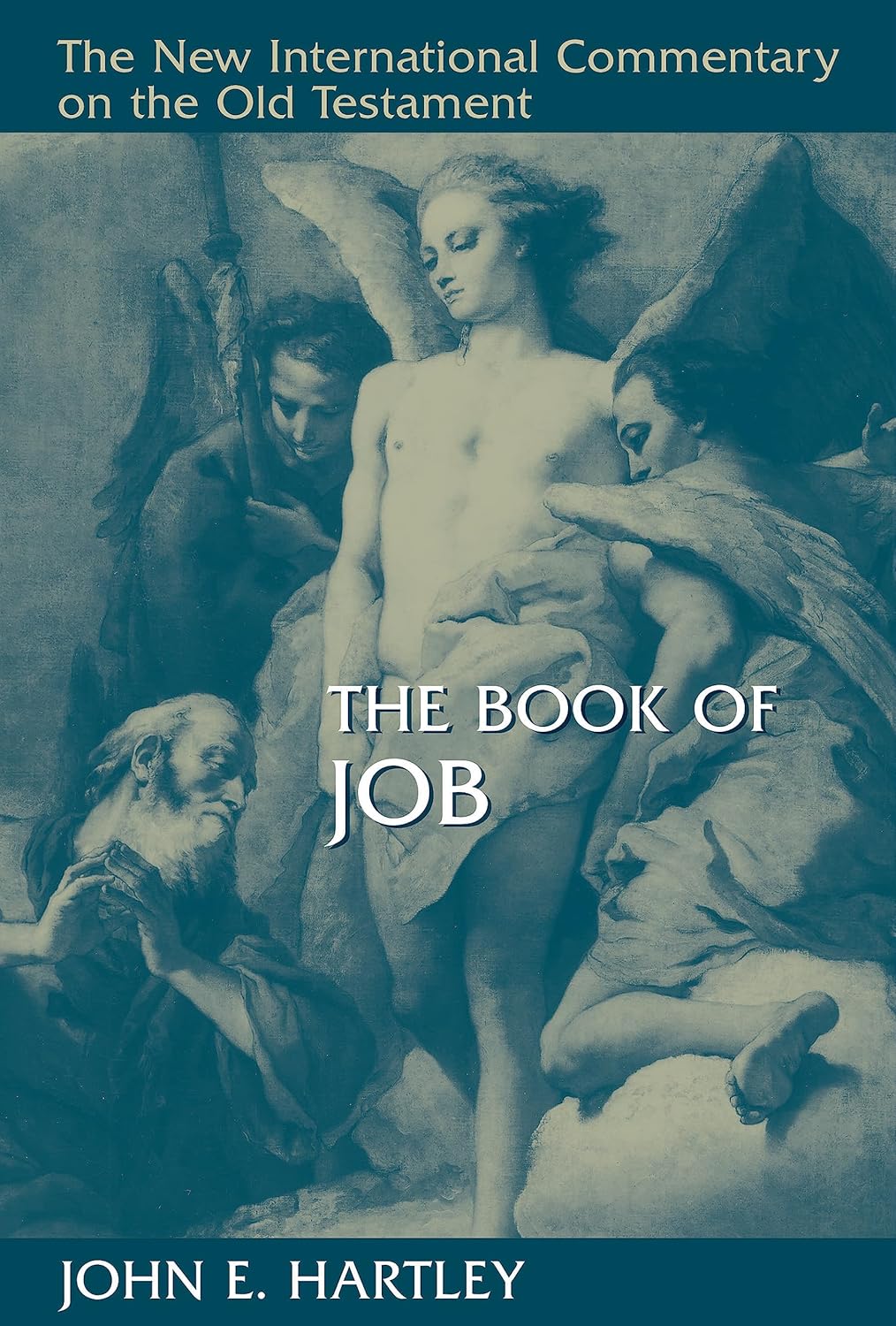
The Book Of Job

AdvancedBusy pastors, Pastors-in-trainingStrong recommendation
8.0
Bible Book: Job
Publisher: Eerdmans
Theological Perspective: Broadly Evangelical
Resource Type: Commentary

Summary

In terms of approach, Hartley begins with an extensive introduction into the book’s authorship, date, structure, textual and linguistic issues, and Ancient Near Eastern background. The main body presents a verse-by-verse (or section-by-section) commentary, with a translation of the Hebrew text and careful attention to textual criticism, syntax, literary structure, and theological significance. While the volume leans toward an academic consumption—especially for pastors or teachers desiring depth—it retains sufficient exposition and application to be of use beyond specialist-only audiences.

It is especially suited to pastors, seminary students, and serious Bible-teachers who are willing to engage technical material in order to ground faithful preaching and teaching of Job’s complex themes of suffering, divine justice, and restoration.

Why Should I Own This Commentary?

Firstly, the work’s strength lies in its careful and disciplined attention to the text of Job. Hartley does not treat Job superficially; instead he wrestles with the Hebrew, explores textual variants, engages the ancient Near Eastern parallels, and tracks the book’s structure so that we are not merely reading isolated verses but seeing how the poetry, narrative and wisdom elements function together. For a Reformed-minded pastor, this is indispensable: the doctrine of God’s sovereignty, human suffering, and ultimate restoration requires careful attention to how Job says it rather than just what we wish it said.

Secondly, the theological and pastoral insights are commendable. Hartley repeatedly emphasizes how Job’s experience confronts the presumption of easy retributive justice and draws believers into the deeper reality of a sovereign, inscrutable yet loving God who redeems his people amid suffering. While his Reformed theology may not always be fully spelled out in the language of covenant or TULIP, the themes he handles resonate deeply with the Five Solas: the Lord’s initiative, Christ-centred redemption implicitly present, and the call to corrupted human creatureliness. In the context of a sermon series on Job, this commentary gives robust material to unpack Job’s confession, divine speeches, and restoration.

Thirdly, in practical terms this volume stands out for usability. It is more manageable than multi-volume commentaries, making it realistic for pastors on a schedule. The English translation of the Hebrew that accompanies the commentary helps those less fluent in Hebrew. The commentary’s layout—introductions, section summaries, theological cross-references and application pointers—makes it a good preparation tool for preaching. That said, readers with minimal Hebrew or without appetite for technical detail may find some sections dense; and Hartley occasionally leaves major theological threads (for example the New Testament-Christological implications of Job) more implicit than explicit.

Closing Recommendation

We warmly recommend this volume to pastors, church-teachers and serious students who intend to shepherd a series through the Book of Job or want a dependable resource for deeper study. If you are preparing sermons or lectures and want to ground yourself in the Hebrew text while maintaining evangelical fidelity and theological depth, Hartley is a wise choice.

However, if you are looking for light devotional reading or a commentary with full-blown Reformed covenant-theological mapping, you may prefer a more pithy or explicitly covenantal work alongside this. Even so, this remains one of the better single-volume commentaries on Job from an evangelical vantage and is well worth the shelf-space.

As pastoral next steps, we can visit the Bible Book Overview, browse Top Recommendations, and use the Reformed Commentary Index to build a wiser working library.


🛒 Purchase here